

Toll Roads and Traffic Laws in France in 2026: What Drivers Need to Know
Table of contents
- Traffic Rules in France: Speed Limits Depend on More Than Just the Type of Road
- Fines in France: What Can Cost a Driver the Most
- Toll Highways in France: How the “péage” System Works
- Crit’Air and ZFE: Where Vehicle Access May Be Restricted in France
- Speed Cameras in France: How Automatic Enforcement Works
- Parking in France: In city centers, rules can vary from neighborhood to neighborhood
- Documents for Traveling in France: What to Have on Hand
- Winter Tires and Snow Chains in France
- Breakdown or Accident in France: What to Do on the Road
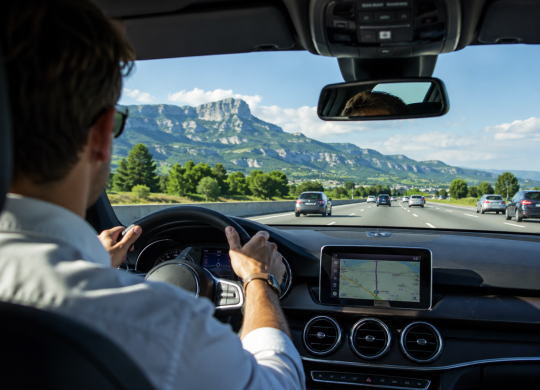
France does not require a general road vignette, but many highways operate under the péage system, and dozens of cities have ZFE environmental zones that require a Crit’Air sticker. Added to this are hundreds of speed cameras, varying speed limits depending on weather conditions, and local regulations in cities. Find out how to pay for roads in France in 2026, where a Crit’Air sticker is required, and what rules you should know before your trip

France offers drivers a wide range of options: you can quickly cross the country on toll autoroutes or plan a route using free national and regional roads through small towns. But planning doesn’t end with choosing a route. On the autoroutes, you’ll need to figure out the péage system, and before entering Paris, Lyon, Marseille, Strasbourg, and many other metropolitan areas, you’ll need to check the ZFE regulations and your car’s Crit’Air category. As of 2026, there are 25 low-emission zones in mainland France, and the level of restrictions varies from city to city.
In this guide, we’ll cover French traffic rules, fines, the toll highway system, Crit’Air and ZFE, speed cameras, parking, documents, and other details that really impact your road trip.
Are you planning a trip to Europe by car?
In many countries, highways are tolled and require an electronic road vignette. This is a digital permit that confirms payment for the use of toll roads and is checked automatically by the license plate number - without stickers and paper receipts. Making a vignette online before you travel will help you avoid fines, travel delays, and unpleasant situations during inspections.

Traffic Rules in France: Speed Limits Depend on More Than Just the Type of Road
In France, it’s not enough for a driver to memorize four basic numbers. Here, speed limits vary depending on the type of road, weather, visibility, and local regulations, and 30 km/h zones are becoming increasingly common in cities.
For passenger cars, the standard limits are as follows:
- 50 km/h – in built-up areas
- 80 km/h – on most two-way roads without a median
- 110 km/h – on roads with separated lanes
- 130 km/h – on highways
But there are exceptions. On certain intercity roads, local authorities may raise the limit from 80 to 90 km/h, and municipalities have the right to set lower speed limits in built-up areas. Therefore, the number on the sign always takes precedence over the general rule.
To learn more about which European countries have introduced new speed limits on highways, follow the link.
Rain automatically lowers the speed limit
This is one of the most distinctive French regulations. During rain or other precipitation, the maximum speed is reduced:
- On highways – from 130 to 110 km/h
- On roads with a median – from 110 to 100 km/h
- On sections where 90 km/h is permitted – to 80 km/h
If visibility drops below 50 meters, the maximum speed is limited to 50 km/h regardless of the type of road.
Lower speed limits also apply to drivers with limited experience: for the first three years after obtaining a license, the maximum speed on highways is 110 km/h.
In our previous article, we discussed where in Europe it’s cheapest and fastest to charge an electric vehicle.
Alcohol, Cell Phones, and Seat Belts
For most drivers, the maximum permitted blood alcohol concentration is 0.5 g/L, while for drivers with less than three years of experience, it is only 0.2 g/L. The French Highway Authority explicitly warns that a novice driver may exceed this limit after just one alcoholic drink.
Holding a phone in your hand while driving is prohibited. France goes even further: drivers are not allowed to use earbuds or a headset in their ear for calls or music. However, hands-free use via the car’s built-in multimedia system is permitted.
Seat belts are mandatory for all passengers. Children under 10 years of age must use a certified child safety seat appropriate for their height and weight.
Another detail to check before setting off: the car must be equipped with a reflective vest and a warning triangle. It’s best to keep the vest inside the car so you can put it on before exiting the vehicle in case of a breakdown or accident.
Learn more about toll roads and traffic rules in Hungary by following the link.
Fines in France: What Can Cost a Driver the Most
In France, many violations carry a fixed base amount, but this can be reduced with prompt payment or, conversely, increased if the payment deadline is missed. Serious cases of speeding, driving under the influence, using a cell phone while driving, and violations in restricted-traffic zones are penalized separately.
The following amounts apply to typical violations:
- Speeding by less than 20 km/h – typically from €68 outside built-up areas to €135 in the city
- Running a red light – €135
- Holding a phone while driving – €135
- Not wearing a seatbelt – €135
- Parking violations – the amount depends on the type of violation and the municipality
- Driving without the required Crit’Air sticker in an area where it is mandatory – the fine can also reach €68 for a passenger car
We previously discussed the most common reasons tourists are fined on European roads in 2026.
Speeding: From a Small Fine to Serious Penalties
In France, penalties depend on the extent of the speeding violation. If a driver exceeds the speed limit by more than 50 km/h, this is already considered a very serious offense: it may result in a large fine, license suspension, and other penalties. Penalties are even more severe for repeat offenses.
A distinctive feature of France is the large number of automated speed cameras. They monitor not only speed but also running red lights and other violations. For tourists, this means that a ticket can be issued even without any contact with the police.
We previously reported that Europe is introducing new measures to combat drunk driving: cars won’t start after alcohol consumption.
Using a Cell Phone While Driving: More Than Just a Fine
Using a cell phone while driving carries a €135 fine, but if the driver simultaneously violates another rule—such as speeding, running a red light, or crossing a lane marking—the consequences can be more severe, including temporary license suspension.
Alcohol: Penalties Quickly Become Criminal
If the blood alcohol concentration exceeds the legal limit, the penalty depends on the level. For levels between 0.5 and 0.8 g/L, an administrative fine is imposed, while at 0.8 g/L and above, the case may have criminal consequences, including a substantial fine, loss of driving privileges, and even imprisonment.
There is one more important thing for foreign drivers to keep in mind: if the violation is recorded by a camera or by the police, the fine may be sent to you after you return home. In the case of a rental car, the rental company usually forwards the driver’s information to the relevant authorities and may charge a separate service fee for processing the request.
In our previous article, we discussed the specifics of driving in the Czech Republic: roads, vignettes, parking, and fines in 2026.
Toll Highways in France: How the “péage” System Works
In France, there is no universal road vignette for passenger cars. Instead, a significant portion of the highways operates under the péage system: the driver pays for a specific route, and the toll depends on the distance and the vehicle class. Official operators update the toll rates annually; for example, Sanef’s rates for 2026 take effect on February 1.
On traditional toll highways, the process is simple: at the entrance, the vehicle is scanned by the system or the driver receives a ticket, and at the exit, the driver pays the calculated amount. Depending on the payment point, bank cards, cash, and electronic telepéage are accepted.
Prices can vary significantly even for routes of the same length, as the French network is managed by different concession operators. Therefore, it’s better to calculate costs for a specific trip rather than use a general “price per kilometer.”

Free-flow: No barrier, but the road is still tolled
The “péage en flux libre” system deserves special attention. On such routes, the driver does not take a ticket or stop at a barrier: cameras and sensors automatically recognize the vehicle’s license plate while it is in motion.
By 2026, this model will be fully operational on, among others, the A13 and A14 between Paris and Normandy. After driving through without using telepéage, payment must be made within 72 hours.
You can do this:
- Automatically via a compatible telepéage badge
- Online using your license plate number
- In France through partner locations in the Nirio network
This system is particularly tricky for tourists: the road may appear to be a regular highway with no toll booths, so it’s easy to assume that travel is free.
If you fail to pay the free-flow toll within 72 hours, a penalty is added to the toll. After receiving a notice, the additional charge can amount to €90, although it can be reduced to €10 if paid promptly within the specified period. If the debt remains unpaid for more than two months, the case may go to court, and the fine may increase to €375.
Learn more about the world’s best countries for road trips in 2026 by following the link.
Crit’Air and ZFE: Where Vehicle Access May Be Restricted in France
In France, environmental restrictions are not enforced nationwide but through Low-Emission Zones (ZFE). To enter these zones, a vehicle must have a Crit’Air sticker indicating its environmental class. As of 2026, there are 25 ZFEs in metropolitan France, including in Paris, Lyon, Marseille, Strasbourg, Toulouse, Bordeaux, Nice, Lille, Nantes, and Montpellier.
Crit’Air has six categories: E, 1, 2, 3, 4, and 5. The class is determined by the vehicle type, fuel type, Euro standard, and date of first registration. The oldest and most polluting vehicles may not be eligible for a Crit’Air sticker at all.
It’s important to note that there is no single list of permitted vehicles for all cities. In 2026, the rules will vary:
- In Paris, Lyon, and some other ZFE areas, restrictions may already apply to Crit’Air 3 vehicles
- In Marseille, Rouen, Reims, and Toulouse, the restrictions are less stringent and primarily affect Crit’Air 4 vehicles
- In other metropolitan areas, restrictions may apply only to vehicles without an environmental classification or during specific hours
Therefore, it is incorrect to plan a trip based on the assumption that “I have a Crit’Air, so I can drive anywhere.” The sticker merely indicates the vehicle’s environmental class, while entry rights are determined by the specific ZFE.
Learn more about current toll rates in Poland for 2026 by following the link.
Does a vehicle with foreign license plates need a Crit’Air sticker?
Yes. French regulations also apply to vehicles registered abroad. If the route passes through a ZFE, a foreign vehicle must also obtain a Crit’Air sticker of the appropriate category.
The official cost of the sticker itself is €3.11 plus shipping. For shipments outside France, the final amount depends on the delivery method. After submitting the application, the applicant receives an electronic confirmation of the category while the physical sticker is being mailed.
You should only purchase a Crit’Air sticker through the official government service. The French Ministry of Ecology specifically warns against third-party websites that sell the same sticker at a significant markup.
Therefore, if your route includes Paris, Lyon, Marseille, or another major city, you should check for Low-Emission Zones (LEZs) as early as the route-planning stage, especially if your vehicle is diesel-powered or meets an older Euro emission standard.
Learn more about the specifics of traveling through Slovakia in your own car by following the link.
Speed Cameras in France: How Automatic Enforcement Works
In France, speed is monitored not only by standard fixed cameras. The roads are equipped with average-speed cameras, mobile enforcement units, traffic light cameras, and so-called “voitures-radar”—vehicles with built-in enforcement systems that can record violations without the driver having to stop.
For tourists, the key thing to note is that some of these cameras do not look like the familiar large roadside speed cameras. For example, “voitures-radar” look almost identical to ordinary cars and can operate while moving. These vehicles are used by both the police and private operators under government supervision.
Average speed enforcement is also in effect on certain routes: the system detects a vehicle at the beginning and end of a section, then calculates the average speed. In other words, briefly slowing down before the camera won’t help here.
In France, drivers should pay particular attention to the transitions between different speed limits: 130 km/h on the highway, 110 km/h in the rain, 80 or 90 km/h on intercity roads, and 50 or 30 km/h when entering a city. It is precisely these sudden changes in the speed limit that often result in a fine.
Another point concerns navigation systems. French law prohibits devices and features that precisely show the location of speed cameras or specifically warn about a particular speed camera. At the same time, services may alert drivers to broader “danger zones” without specifying the exact location of the speed camera.
For rental cars, the camera system works the same way as it does for local vehicles. If a violation is automatically recorded, the rental company may provide the French authorities with the actual driver’s information and then separately charge its own administrative fee for processing the request.
We previously wrote about the ins and outs of traveling through Croatia by car: fines, highways, parking, and important traffic rules.
Parking in France: In city centers, rules can vary from neighborhood to neighborhood
In France, parking is largely regulated by municipalities, so there is no uniform rate system across the entire country. In Paris, Lyon, Bordeaux, or Nice, the cost, maximum parking time, and paid hours can vary significantly even between neighboring districts.
In most cities, it’s best to follow road signs, parking meters, and colored markings. Paid street parking is often tied to the license plate, and you can pay via a parking meter or a mobile app. In Paris, for example, the rate depends on the zone and the type of vehicle, and higher rates will apply to heavy SUVs starting in 2024.
There’s also an important difference from a traditional parking ticket. If a driver fails to pay for a metered spot or exceeds the paid time, many cities apply the Forfait Post-Stationnement (FPS)—a special fee for unpaid parking. The amount is set by the municipality, so the fee in Paris may differ significantly from that in a small French town.
On central streets, there are also often spaces reserved exclusively for deliveries, residents, taxis, people with disabilities, or electric vehicle charging. Even if a spot is physically vacant, that doesn’t mean a tourist can park there.
In large cities, underground parking garages or P+R facilities on the outskirts are often a more practical option. This is especially true in Paris: street parking in the city center is expensive, and the combination of the Low-Emission Zone (ZFE), heavy traffic, and complex local rules makes driving not the most convenient way to get around the central districts.
Learn more about traffic rules, fines, toll roads, and regulations for driving in Austria in 2026 by following the link.
Documents for Traveling in France: What to Have on Hand
French roads do not require tourists to carry a separate “road travel kit” of documents. However, during a traffic stop, you must confirm three things: who is driving the car, who owns it, and whether the vehicle has valid insurance.
For your trip, you should keep the following in the car:
- A valid driver’s license
- Vehicle registration certificate
- Identification document
- Insurance documents
- Rental agreement, if the car is rented
Driver’s licenses issued by EU member states are valid in France as long as they remain valid. For documents from non-EU countries, the rules depend on the country of issuance and the format of the license. Therefore, before your trip, you should check whether an international document or an official translation is required.
For vehicles registered in the EU, the license plate usually serves as proof of mandatory liability insurance. However, the EU still recommends carrying your insurance documents with you: in the event of an accident or during a police check, this allows you to confirm your coverage more quickly.
In our previous article, we discussed traffic rules in Italy in 2026, Autostrade tolls, fines, and key considerations for road travel.
Green Card for Travel to France
If you’re traveling to France in a vehicle registered outside the EU, check in advance whether your liability insurance is valid in France and in all transit countries. For vehicles from countries that participate in the international Green Card system, this certificate confirms that you have the necessary insurance coverage abroad.
It is especially important to verify that the policy’s validity period covers the entire route, not just the dates of your stay in France. For example, if your route passes through Poland, Germany, the Czech Republic, Austria, or other countries, the insurance must remain valid for the duration of the entire trip.
On Visit World, you can apply for a Green Card online before departure. This allows you to prepare your insurance document in advance for an international road trip and avoids having to look for a way to obtain coverage while you’re already on the road.
Winter Tires and Snow Chains in France
In France, there is no single rule requiring all drivers to switch to winter tires as of a specific date. Specific requirements apply only in mountainous areas.
From November 1 through March 31, the “Loi Montagne” regulations apply in parts of the Alps, the Pyrenees, the Massif Central, the Jura, the Vosges, and Corsica. The boundaries of these zones are marked by special road signs.
For passenger cars, there are two options:
- Install four winter tires that meet the established requirements
- Have snow chains or textile anti-skid devices for at least two drive wheels
Starting in November 2024, winter tires for these zones must bear the 3PMSF marking. The M+S designation without 3PMSF will no longer be considered sufficient to meet these requirements.
Stricter rules may apply on certain snow-covered roads. A special sign may require that chains be installed directly on the wheels. In such cases, having winter tires alone may not be sufficient.
Before traveling to the Alps or the Pyrenees, it’s a good idea to check road conditions and mountain passes. After heavy snowfall, certain sections may be temporarily closed or restricted to vehicles with snow chains only.
In a previous article, we reported that Europe is introducing mandatory surveillance cameras to monitor drivers.
Breakdown or Accident in France: What to Do on the Road
On a highway, you may only stop in the event of an actual breakdown or accident. You must move the vehicle as far to the right as possible and stop in the emergency lane.
After stopping:
- Turn on your hazard lights
- Put on a reflective vest before exiting the vehicle
- Guide passengers behind the safety barrier
- Do not remain near the vehicle on the roadway
- Call for help using an emergency phone or the highway operator’s service
On French highways, towing is handled by authorized services. It is not always possible to call any tow truck of your choice directly onto a toll road. In such cases, regulated rates apply for assistance and towing.
In the event of an accident with no injuries, drivers typically fill out a European “constat amiable.” This document records the circumstances of the accident, vehicle details, and insurance information.
If there are injuries, the vehicles are blocking traffic, or the situation is dangerous, you must call emergency services. In France, the single European emergency number is 112.
The emergency stop triangle should only be used when placing it does not create an additional risk. On a highway, stepping onto the roadway to set up the triangle is dangerous, so the priority is to safely move behind the guardrail.
Are you traveling abroad with your own car or a rented car?
Before traveling, it is important to check whether a road vignette is required for toll roads in the countries of your route. Failure to have a valid vignette can result in fines and automatic camera recordings of violations. Getting an electronic vignette from Visit World is an easy way to travel more relaxed, without unnecessary expenses and surprises on the road!
We remind you! Traveling through Europe in 2026 does not have to be expensive, even despite the general rise in prices. Analysts have compiled a rating of the most affordable destinations where you can combine relaxation, experiences, and moderate expenses. Follow the link to learn about budget locations in Europe that are worth considering for your 2026 vacation.
Products from Visit World for a comfortable trip:
Travel guide for 200 countries;
Legal advice from a local specialist on visa and migration issues;
Travel insurance around the world (please select the country of interest and citizenship to receive services);
Medical insurance all over the world.
We monitor the accuracy and relevance of our information, so if you notice any errors or inconsistencies, please contact our hotline.
Frequantly
asked questions
Do you need a vignette to drive on French roads?
Where in France is a Crit’Air required?
What is the speed limit on highways in France?
Can you avoid paying for a free-flow toll road if there’s no toll gate?
Are winter tires mandatory in France?
Recommended articles
3 min
Transport
A Road Trip Through the Czech Republic: Roads, Vignettes, Parking, and Fines in 2026
On most toll highways in the Czech Republic, passenger cars require an electronic vignette, and its price depends not only on the validity period but also on the type of powertrain. In 2026, a standard 10-day vignette costs 300 CZK, and electric vehicles can use toll roads for free provided they meet the exemption requirements. Learn how eDalnice works, what traffic rules apply in the Czech Republic, and what you should check before a road trip
23 Aug. 2026
More details3 min
Transport
Toll Roads and Traffic Rules in Hungary in 2026: What Tourists Need to Know
To drive on most Hungarian highways, you need an e-matrica, and its category depends on the vehicle’s specifications and the number of passenger seats. In 2026, the system introduced new regional products, and an error in the license plate number or an incorrect category may result in an additional charge. Here’s how Hungary’s toll roads work, what traffic rules apply in the country, and what you need to know before your trip
27 Aug. 2026
More details3 min
Transport
Traveling Through Croatia by Car: Fines, Highways, Parking, and Important Traffic Rules
Croatia does not have a road vignette, but most major highways are toll roads, and the toll amount depends on the route and vehicle category. Added to this are seasonal traffic jams on roads leading to the Adriatic, speed cameras, and specific parking rules in popular tourist cities. Find out how Croatian highways work, what traffic rules and fines are in effect in 2026, and what you should consider before taking a road trip
20 Aug. 2026
More details3 min
Transport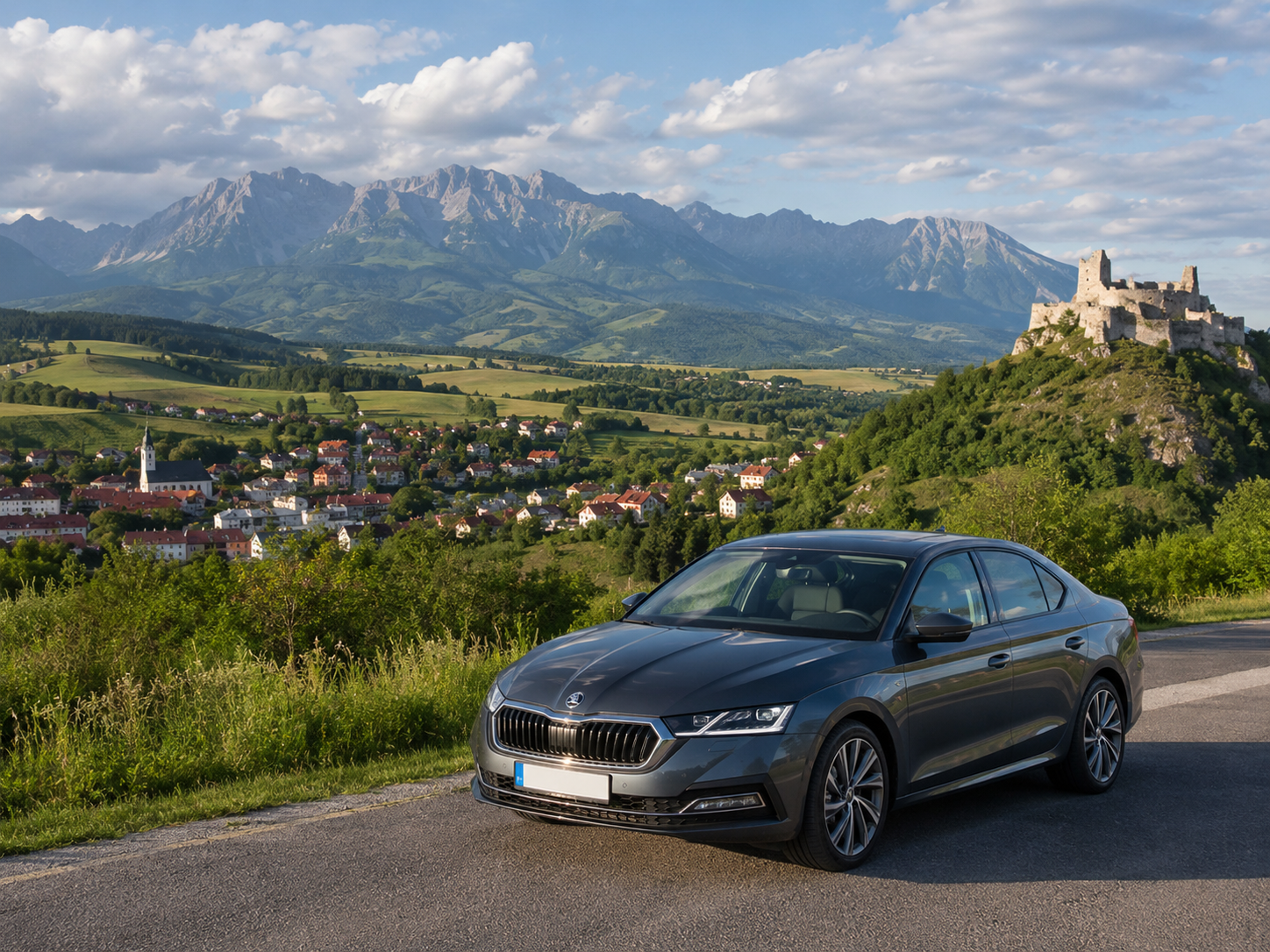
Slovakia by Car in 2026: Traffic Rules, Fines, Vignettes, and Toll Roads
It’s easy to drive through Slovakia in a few hours, but a single mistake with eZnamka can make a short transit much more expensive. Toll highways here are monitored by license plate numbers, separate rules apply to trailers, and in winter, drivers also have to contend with the weather in the Tatra Mountains. Let’s break down how much Slovakia’s roads will cost in 2026, where a vignette is required, and which rules you shouldn’t ignore
30 Aug. 2026
More detailsAll materials and articles are owned by VisitWorld.Today and are protected by international intellectual property regulations. When using materials, approval from VisitWorld.Today is required.