

The EU Auto Market in 2026: Electric Cars Have Caught Up to Gasoline-Powered Models
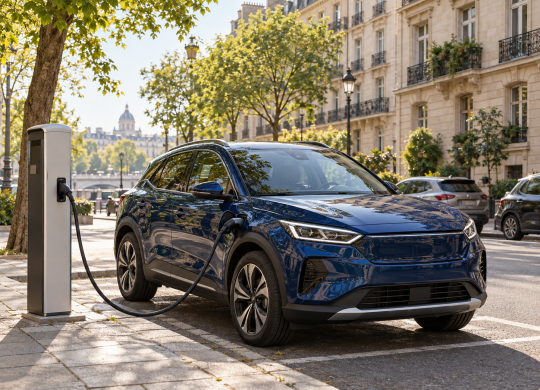
Electric vehicles have caught up with gasoline-powered models in terms of their share of new registrations in the EU, but hybrids remain in the lead. The largest automotive markets are changing at different rates. Learn more about the most popular types of cars in 2026 and the countries where demand for electric models is growing the fastest

From January through August 2026, new passenger car registrations in the European Union rose by 5.3%. According to data from the European Automobile Manufacturers’ Association (ACEA), the share of fully electric models increased from 15.8% to 21.7% and, on a rounded basis, matched that of gasoline-powered cars. Hybrids that do not require external charging remained the most popular, accounting for 36.6% of new registrations. At the same time, gasoline and diesel models together hold only 29% of the market, down from 37.5% a year earlier.
Are you planning a trip to Europe by car?
In many countries, highways are tolled and require an electronic road vignette. This is a digital permit that confirms payment for the use of toll roads and is checked automatically by the license plate number - without stickers and paper receipts. Making a vignette online before you travel will help you avoid fines, travel delays, and unpleasant situations during inspections.

How did the EU new-car market change in 2026?
The EU new-car market grew unevenly. The year began with a decline: in January, registrations fell by 3.9% compared to the same month in 2025. However, starting in February, the trend turned positive. The largest increases during the first eight months were recorded in March and June—12.5% and 13.6%, respectively.
In the summer, the pace slowed: growth was 3% in July and 4.5% in August. At the same time, the lower number of registrations in August compared to July does not in itself indicate a drop in demand: the chart shows a similar seasonal decline from the previous year.

New passenger car registrations in the EU: month-over-month comparison with the previous year. Source: ACEA.
The statistics cover only new passenger cars registered in European Union countries. They do not account for transactions in the used car market and do not reflect the composition of the entire vehicle fleet. Therefore, these changes primarily indicate which cars new car buyers are choosing.
Learn more about the most fuel-efficient cars of 2026 by following the link.
Electric cars, hybrids, or gas-powered vehicles: what Europeans are choosing
Hybrid cars remain the largest segment in the EU: nearly 2.76 million such vehicles were registered from January through August. This HEV category combines an internal combustion engine with an electric motor and does not require charging from a power outlet. It includes both full and mild hybrids, so not all of these cars can run solely on electric power.
All-electric vehicles took the next spot with 1,641,333 registrations. They even slightly outpaced gasoline-powered models, which totaled 1,634,733 registrations. The difference is only 6,600 vehicles, so after rounding, both categories have an equal market share.
Plug-in hybrids (PHEVs) constitute a separate segment. They have an internal combustion engine but can also be charged from an external source and can travel part of the route on electric power. Over the eight-month period, 758,082 such vehicles were registered in the EU.

Breakdown of new passenger car registrations in the EU for January–August 2026: HEVs – 36.6%, BEVs and gasoline-powered cars – 21.7% each, PHEVs – 10%, diesel cars – 7.3%, others – 2.7%. Source: ACEA.
Together, electric vehicles and both categories of hybrids account for 68.3% of new registrations. However, it is incorrect to refer to all these vehicles as electric vehicles: the majority in this group still use gasoline or diesel alongside electric propulsion.
To learn more about which European countries have introduced new speed limits on highways, follow the link.
In which countries is demand for electric vehicles growing the fastest?
Among the four largest markets for fully electric cars in the EU, France showed the highest growth rates. From January through August, electric vehicle registrations in the country increased by 74.2% compared to the same period in 2025. Germany and Denmark also recorded significant growth, while Belgium grew more slowly:
- France: +74.2%
- Germany: +53.1%
- Denmark: +40.9%
- Belgium: +13.1%
Together, these four countries accounted for 64% of all new electric vehicle registrations in the EU. The percentages shown reflect the growth in the number of registered vehicles, not the share of electric models in national markets.
At the same time, demand for hybrid vehicles grew in other regions. Among the major markets listed by ACEA, registrations of conventional hybrids increased most notably in Spain and Italy—by 21% and 20.5%, respectively. In the plug-in hybrid segment, Italy stood out in particular with a 77.6% increase. This indicates that the transition to electrified vehicles is taking different paths: fully electric models and hybrids are gaining popularity at uneven rates.
We previously discussed the most common reasons tourists are fined on European roads in 2026.
How are gasoline and diesel cars losing ground?
In the first eight months of 2026, registrations of gasoline-powered cars in the EU fell by 18.6%. The decline affected all four of the largest national car markets: in France it amounted to 35.8%, in Germany – 21.9%, in Spain – 18.5%, and in Italy – 16.7%. Thus, the gasoline segment is losing not only market share amid the growth of other categories but also buyers in absolute terms.
Diesel cars also saw a 18.6% decline in registrations. Their market share fell from 9.4% to 7.3% over the year. New diesel models are now less popular even than plug-in hybrids, which account for one-tenth of the market.
At the same time, these figures do not mean that Europeans are turning their backs on internal combustion engines altogether. Hybrids also use fuel, but in ACEA statistics, they are classified in separate categories. The main change lies in the structure of demand: buyers are increasingly opting for cars with electric motors, although fully electric models still account for only about one in five new cars in the EU.
Are you traveling abroad with your own car or a rented car?
Before traveling, it is important to check whether a road vignette is required for toll roads in the countries of your route. Failure to have a valid vignette can result in fines and automatic camera recordings of violations. Getting an electronic vignette from Visit World is an easy way to travel more relaxed, without unnecessary expenses and surprises on the road!
We remind you! Traveling through Europe in 2026 does not have to be expensive, even despite the general rise in prices. Analysts have compiled a rating of the most affordable destinations where you can combine relaxation, experiences, and moderate expenses. Follow the link to learn about budget locations in Europe that are worth considering for your 2026 vacation.
Products from Visit World for a comfortable trip:
Travel guide for 200 countries;
Legal advice from a local specialist on visa and migration issues;
Travel insurance around the world (please select the country of interest and citizenship to receive services);
Medical insurance all over the world.
We monitor the accuracy and relevance of our information, so if you notice any errors or inconsistencies, please contact our hotline.
Frequantly
asked questions
Which cars are being purchased most often in the EU in 2026?
Have electric cars overtaken gasoline-powered cars in Europe?
In which EU countries are electric car registrations growing the fastest?
How do BEVs differ from HEVs and PHEVs?
Does the decline in demand for diesel mean lower prices for these cars?
Recommended articles
2 min
Transport
Where in Europe Is It Cheapest and Fastest to Charge an Electric Car: A Ranking of Countries in 2026
Europe continues to actively develop its electric vehicle infrastructure: the number of public charging stations has exceeded 1.3 million, and competition among countries is driving more affordable rates and faster charging. Learn more about where in Europe it’s cheapest to charge an electric vehicle, which countries have the most developed network of charging stations, and what to consider before taking a road trip
29 Jun. 2026
More details2 min
Transport
The EU is changing the rules for cars starting in November 2026: the new Euro 7 standard
Starting November 29, 2026, the EU will begin applying the Euro 7 standard to new passenger cars and vans. Learn more about environmental certificates, requirements for electric vehicle batteries, and the implications for owners of older vehicles
26 Aug. 2026
More details2 min
Transport
The World's Most Popular Cars of 2026: A Ranking of Models
The Tesla Model Y became the world’s best-selling car for the January–July 2026 period, outpacing the Toyota Corolla and the Ford F-Series. At the same time, three Toyota models made it into the top ten. Learn more about the global sales leaders and the major changes in the automotive market
31 Aug. 2026
More details2 min
Transport
Most Fuel-Efficient Cars of 2026: Models with the Lowest Fuel Consumption
Experts at Auto Bild tested the latest diesel and hybrid models and identified the cars with the lowest real-world fuel consumption. Learn more about the most fuel-efficient cars of 2026, their range, and key specifications
22 Sep. 2026
More detailsAll materials and articles are owned by VisitWorld.Today and are protected by international intellectual property regulations. When using materials, approval from VisitWorld.Today is required.