

The EU is changing the rules for cars starting in November 2026: the new Euro 7 standard
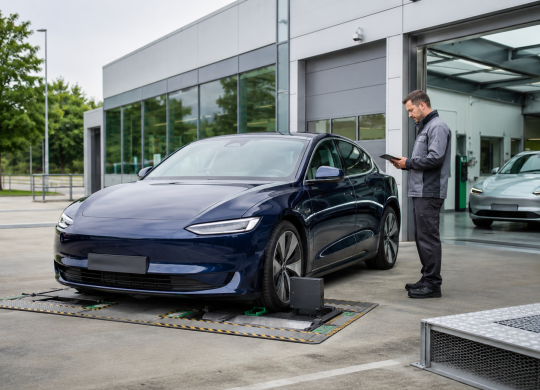
Starting November 29, 2026, the EU will begin applying the Euro 7 standard to new passenger cars and vans. Learn more about environmental certificates, requirements for electric vehicle batteries, and the implications for owners of older vehicles

Starting November 29, 2026, Euro 7 requirements will become mandatory for new types of passenger cars and vans that manufacturers certify in the EU for the first time. The standard introduces controls on particulate emissions from brakes and tires, environmental data sheets, inspections of the condition of traction batteries, and more realistic testing of electric vehicles. For all new vehicles in these categories, the rules will take effect on November 29, 2027, while vehicles already registered will not need to be retrofitted. This is stipulated by EU Regulation 2024/1257.
Are you planning a trip to Europe by car?
In many countries, highways are tolled and require an electronic road vignette. This is a digital permit that confirms payment for the use of toll roads and is checked automatically by the license plate number - without stickers and paper receipts. Making a vignette online before you travel will help you avoid fines, travel delays, and unpleasant situations during inspections.

What will change for new vehicles under the Euro 7 standard?
Euro 7 covers more than just exhaust emissions. The requirements extend to pollution generated during vehicle operation, as well as battery condition, energy consumption, and the availability of environmental data. The standard will apply to gasoline, diesel, hybrid, and fully electric models.
The main changes include:
- Limits on particulate emissions generated during braking
- Monitoring of tire wear and associated microparticle emissions
- Verification of compliance with environmental standards over a longer service life
- Onboard monitoring of emissions, fuel consumption, and electricity consumption
- Minimum durability requirements for traction batteries
- Creation of a digital environmental passport for every new vehicle
For passenger cars and vans, Euro 7 largely retains the existing Euro 6 limits on exhaust emissions but expands the list of regulated parameters. In particular, when measuring particulate matter, finer particles with a diameter of 10 nanometers or more will be taken into account. At the same time, brake requirements will also apply to electric vehicles, as they generate non-exhaust emissions.
To learn more about which European countries have introduced new speed limits on highways, follow the link.
New Requirements for Electric Vehicles and Traction Batteries
Euro 7 establishes mandatory minimum battery durability standards for the first time for fully electric vehicles and plug-in hybrids.
For M1-category passenger cars, the battery must retain:
- At least 80% of its initial capacity during the first 5 years or 100,000 km of mileage
- At least 72% of its capacity after this period and up to 8 years or 160,000 km
For N1-category light commercial vehicles, the thresholds are lower: 75% during the first 5 years or 100,000 km, and 67% up to 8 years or 160,000 km. In both cases, the threshold that the vehicle reaches first—age or mileage—applies.
This does not refer to a standard manufacturer’s warranty, but rather to regulatory requirements for battery condition, compliance with which can be verified during operation. The vehicle’s onboard system will record the battery’s condition, and the owner will have access to up-to-date data.
Specifically for electric vehicles, low-temperature range tests are being introduced, particularly at –7°C. This will demonstrate how much the actual driving range is reduced in winter due to cabin heating and decreased battery efficiency.
The testing methods are set forth in EU Implementing Regulation 2026/1764.
We previously discussed the most common reasons tourists are fined on European roads in 2026.
Electric Vehicle Environmental Passport: What Data It Will Contain
Every new vehicle that complies with Euro 7 will receive a digital Environmental Vehicle Passport (EVP). The manufacturer will provide it to the buyer along with the vehicle, and the data specified in the document must remain accessible for at least 20 years from the date of manufacture.
The Environmental Vehicle Passport will include:
- Make, model, VIN, and date of manufacture
- Vehicle type approval number and date
- Data on engine or electric motor power
- Emissions figures for CO, NOx, hydrocarbons, and particulate matter
- WLTP results for CO₂ emissions and fuel consumption
- Electricity consumption and certified range
- Relevant parameters for plug-in hybrids
Access to the vehicle information sheet will be provided via a QR code. It will be affixed to the vehicle in a visible location or displayed in the infotainment system menu. After scanning the code, the user will be redirected to a secure webpage containing data specific to that vehicle. No registration or separate app installation is required, though in some cases the system may prompt the user to enter the VIN.
Separately, on the vehicle’s screen, users will be able to view actual fuel or electricity consumption, NOx emissions, and the state of the traction battery.
In our previous article, we discussed where in Europe it’s cheapest and fastest to charge an electric vehicle.
When exactly will the Euro 7 regulations take effect?
The transition to Euro 7 will take place in phases. The date of November 29, 2026, does not mean that all new vehicles in the EU must immediately comply with the standard as of that day.
The key deadlines are as follows:
- November 29, 2026 — Euro 7 will become mandatory for new types of passenger cars and light commercial vehicles in categories M1 and N1
- November 29, 2027 — the requirements will apply to all new vehicles in these categories that are sold, registered, or put into service in the EU
- May 29, 2028 — the rules will begin to apply to new types of buses, trucks, and other heavy-duty vehicles
- May 29, 2029 — Euro 7 will become mandatory for all new heavy-duty vehicles in the relevant categories
A “new type” is defined as a model or variant that does not yet have the required type approval in the EU. Therefore, during the transition period, manufacturers will be able to sell new vehicles of previously certified types that meet the Euro 6 standard. After November 29, 2027, most of these vehicles will no longer be eligible for initial registration as new if they do not comply with Euro 7. Separate, later deadlines are provided for small-series manufacturers.
Are you traveling abroad with your own car or a rented car?
Before traveling, it is important to check whether a road vignette is required for toll roads in the countries of your route. Failure to have a valid vignette can result in fines and automatic camera recordings of violations. Getting an electronic vignette from Visit World is an easy way to travel more relaxed, without unnecessary expenses and surprises on the road!
We remind you! Traveling through Europe in 2026 does not have to be expensive, even despite the general rise in prices. Analysts have compiled a rating of the most affordable destinations where you can combine relaxation, experiences, and moderate expenses. Follow the link to learn about budget locations in Europe that are worth considering for your 2026 vacation.
Products from Visit World for a comfortable trip:
Travel guide for 200 countries;
Legal advice from a local specialist on visa and migration issues;
Travel insurance around the world (please select the country of interest and citizenship to receive services);
Medical insurance all over the world.
We monitor the accuracy and relevance of our information, so if you notice any errors or inconsistencies, please contact our hotline.
Frequantly
asked questions
Will Euro 6 vehicles be banned after November 29, 2026?
Do I need to retrofit my old car to meet Euro 7 standards?
Does Euro 7 apply to electric vehicles?
What does “new vehicle type” mean?
When must all new passenger cars comply with Euro 7?
Recommended articles
3 min
Transport
Traveling Through Croatia by Car: Fines, Highways, Parking, and Important Traffic Rules
Croatia does not have a road vignette, but most major highways are toll roads, and the toll amount depends on the route and vehicle category. Added to this are seasonal traffic jams on roads leading to the Adriatic, speed cameras, and specific parking rules in popular tourist cities. Find out how Croatian highways work, what traffic rules and fines are in effect in 2026, and what you should consider before taking a road trip
20 Aug. 2026
More details2 min
Transport
Poland to Waive Road Tolls for Some Drivers: What Will Change Starting in September 2026
Starting September 21, 2026, the rules for using the e-TOLL system in Poland will change for passenger vehicles with trailers. Some drivers will no longer be required to pay the electronic toll, but users with a balance remaining in their account will have to request a refund on their own. Here’s who the new rules apply to and what you should do before closing your account
18 Aug. 2026
More details3 min
Transport
Toll Roads and Traffic Rules in Hungary in 2026: What Tourists Need to Know
To drive on most Hungarian highways, you need an e-matrica, and its category depends on the vehicle’s specifications and the number of passenger seats. In 2026, the system introduced new regional products, and an error in the license plate number or an incorrect category may result in an additional charge. Here’s how Hungary’s toll roads work, what traffic rules apply in the country, and what you need to know before your trip
27 Aug. 2026
More details3 min
Transport
Slovakia by Car in 2026: Traffic Rules, Fines, Vignettes, and Toll Roads
It’s easy to drive through Slovakia in a few hours, but a single mistake with eZnamka can make a short transit much more expensive. Toll highways here are monitored by license plate numbers, separate rules apply to trailers, and in winter, drivers also have to contend with the weather in the Tatra Mountains. Let’s break down how much Slovakia’s roads will cost in 2026, where a vignette is required, and which rules you shouldn’t ignore
30 Aug. 2026
More detailsAll materials and articles are owned by VisitWorld.Today and are protected by international intellectual property regulations. When using materials, approval from VisitWorld.Today is required.