

Renting in Germany in 2026: Rental Prices per m² by City
Table of contents
- Rent in Germany in 2026: The Big Picture
- Berlin: Growth Is Slowing, but Prices Remain High
- Hamburg and Frankfurt: The Fastest Price Growth
- From Duisburg to Munich: What a Square Metre Costs by City
- Rent Controls in Germany: What Applies Until 2029
- What to Expect From the German Housing Market and What to Watch For?
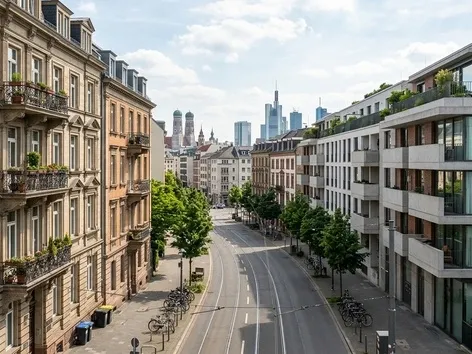
Rents in Germany are rising unevenly, with prices in Munich nearly three times higher than in Duisburg. Find out where rents are increasing the fastest and why

Finding an apartment in a big German city is hard right now, and the numbers back that up. Rents in Germany are climbing again this year, although the pace varies noticeably from city to city. Ausnews reports, citing a report by Immowelt.
Analysts at the portal compared listing prices for the first eight months of the year across the country’s 15 largest cities. The gap is striking: from €7.60 per square metre in Duisburg to €21.65 in Munich. Prices are climbing fastest in Hamburg and Frankfurt, while Berlin, where rents rose sharply for several years running, has finally eased off. Below, we go through each city in turn and look at what it means for anyone searching for a home.
Read also: Germany is raising the minimum wage from 2027 – the main changes.
Buying, selling or renting property in a foreign country almost always involves dozens of documents and fine print. A real estate lawyer checks the contract, proof of ownership and any side agreements, and defends your interests if a dispute arises. Working with one saves time and money and helps you steer clear of scams.
Choose a real estate lawyer on VisitWorld by entering your citizenship and destination country.

Rent in Germany in 2026: The Big Picture
Interest in renting keeps growing. Between January and August 2026, rentals accounted for 81.7% of all searches on Immowelt, compared with 80.6% a year earlier. The explanation is simple: mortgages are expensive, and for many families owning a home is still out of reach. They stay in the rental market, and competition for every listing gets tougher.
Nationwide, apartments in existing buildings (excluding new builds) have become 2.1% more expensive on average since the start of the year. The average rent now stands at €10.83 per square metre. A year ago, over the same months, the increase was almost twice as large, at 3.9%. Big cities are pulling the average up, though: in the 15 largest, rents have risen by 2.9% on average.
One clarification straight away: these are asking prices in listings, not the amounts actually written into existing leases. The difference can be considerable, especially for people who have been renting for a long time.
Visit World services for tourists, migrants, and expats: Insurance | Guides | Legal advice
Berlin: Growth Is Slowing, but Prices Remain High
In the capital, rents have risen by 1.8% since the start of the year, and a square metre costs €14.63 on average. Only in Leipzig are prices rising more slowly, at 1.3%. For comparison, over the same period last year Berlin added 4.4%.
Part of the reason is demographics. According to the Berlin-Brandenburg Statistical Office, almost 19,700 more people moved to the city than left it in 2025. That is 27% fewer than a year earlier, so new rental seekers are being added more slowly. In the suburbs, by contrast, the population keeps growing gradually, and rents there are rising too.
Berlin still ranks fourth in rental costs among the cities studied, and finding an apartment there remains difficult.
The cost of living in Germany in 2026: follow the link.
Hamburg and Frankfurt: The Fastest Price Growth
Hamburg leads in terms of pace: rents rose by 4.8%, to €13.98 per square metre. Frankfurt is not far behind, with 4.7% and a price of €17.12.
Both cities are building less new housing. In Hamburg, 5,976 apartments were completed in 2025, roughly 28% fewer than a year earlier. In Frankfurt, according to the city’s statistics portal, 9% fewer new apartments were built, 3,684 in total. The shrinking supply is most likely fuelling price growth, although the report does not directly prove this link.
Taxation for foreigners in Germany in 2026 is covered here.
From Duisburg to Munich: What a Square Metre Costs by City
Munich remains the most expensive city for tenants. Prices there rose by 2.8%, and the average cost of a square metre reached €21.65, about €4.50 more than in Frankfurt, which ranks second. At the other end of the scale are Duisburg and Dortmund. Here are some benchmarks for comparison:
- Munich: €21.65 per m², up 2.8%
- Frankfurt: €17.12 per m², up 4.7%
- Berlin: €14.63 per m², up 1.8%
- Hamburg: €13.98 per m², up 4.8%
- Dortmund: €8.34 per m², up 2.1%
- Duisburg: €7.60 per m²
- Cologne, Bremen and Dresden: Where the Market Has Eased
In Bremen and Dresden, rents rose by 3.4%, in Cologne by 3.1% and in Nuremberg by 3%. For Cologne this is rather good news. Last year, over the same period, prices there jumped by 9.7%, while this year’s increase is three times smaller.
Experts link this to construction: in 2025, 4,623 new apartments were completed in Cologne, the highest figure in at least ten years. With more supply, prices are rising more calmly. Düsseldorf and Stuttgart are also seeing moderate growth, with rents up by 2.4% in each.
The best cities in Germany for expats in 2026 are covered in this article.
Rent Controls in Germany: What Applies Until 2029
German lawmakers are not standing idly by. In June 2025, the Bundestag extended the so-called rent brake (Mietpreisbremse) until 31 December 2029. In areas with a tight housing market, designated by the governments of the federal states, the starting rent for a new tenant may not exceed the local reference rent by more than 10%. The rule does not apply to housing that was first used and let after 1 October 2014.
There is a caveat too: the mechanism does not work everywhere, only where a federal state has officially declared the market tight. So before signing a lease, it is worth finding out whether the brake applies in your particular area.
What to Expect From the German Housing Market and What to Watch For?
Immowelt itself does not promise quick relief. Plenty of people want to rent, buying a home is still difficult for most families, and construction is slow in many places. The company therefore expects rents to keep rising. For anyone planning a search, here are a few practical tips:
- check whether rent controls apply in the area, and compare the asking rent with the local Mietspiegel (rent index);
- find out whether the quoted figure is the base rent (Kaltmiete) or already includes additional costs;
- put your document package together in advance, because good listings go within days;
- ask a lawyer to review the contract before you sign.
The German rental market is fast and competitive, and the contract is often long and full of terms that are easy to misread. A real estate lawyer can help you work out whether the rent is inflated compared with local benchmarks and whether rent increase limits apply in your area. They will go through the contract, the clauses on additional charges, and the terms on deposits and eviction. If a dispute with a landlord arises, the specialist will represent your interests and advise you on what to do next. For those who are thinking of buying rather than renting, a lawyer will prepare or check all the documents on ownership and transfer of the property. This will save you stress, time and money and, above all, protect you from unpleasant surprises.
Find your real estate lawyer on VisitWorld!
A reminder: Germany’s pension system has been operating with updated figures since July 2026. The value of one pension point has changed, and with it the theoretical maximum monthly payment has gone up. Not everyone will be able to reach the upper limit, as the requirements for years of contributions and income level remain extremely high. We have already covered the maximum pension in Germany in 2026, the conditions for calculating it and average insurance payments according to official statistics.
Photo: generated by Gemini
Products from Visit World for a comfortable trip:
Checklist for obtaining a visa and necessary documents in Germany;
Legal advice on business issues in Germany;
Travel insurance for foreigners in Germany;
Medical insurance around the world.
We monitor the accuracy and relevance of our information, so if you notice any errors or inconsistencies, please contact our hotline.
Frequantly
asked questions
What is the difference between Kaltmiete and Warmmiete?
How much is the security deposit for an apartment?
What documents are needed to rent a home?
Recommended articles
1 min
Residence permit
Luxembourg introduced a D visa instead of the AST permit from 1 October 2026
As of 1 October 2026, Luxembourg requires a D visa instead of an AST permit. Find out who is affected by this change, how to apply and what to do after entering the country
07 Oct. 2026
More details2 min
Popular
World’s Richest Cities by GDP per Capita: 2026 Ranking
The Visual Capitalist ranking reveals where economic output per resident is the highest. Discover the 40 leading cities and why New York ranks only tenth
08 Oct. 2026
More details3 min
Transport
Interrail Global Pass: How to Travel Through Europe Starting at €212
A single Interrail Global Pass gives you access to rail routes in 33 European countries. Learn more about the pass’s price, terms of use, and the option to travel through multiple countries without having to buy separate tickets for each route
11 Oct. 2026
More details3 min
Popular
Mass Protests by Schoolchildren in France in 2026: Causes and Consequences
French high school students are blocking schools and taking to the streets to demand better educational conditions. Learn more about the reasons behind the protests, the protesters’ demands, the government’s response, and the impact on schooling and travel in France
12 Oct. 2026
More detailsAll materials and articles are owned by VisitWorld.Today and are protected by international intellectual property regulations. When using materials, approval from VisitWorld.Today is required.