

Europe suspends biometric border control: what to know about EES system problems in 2026
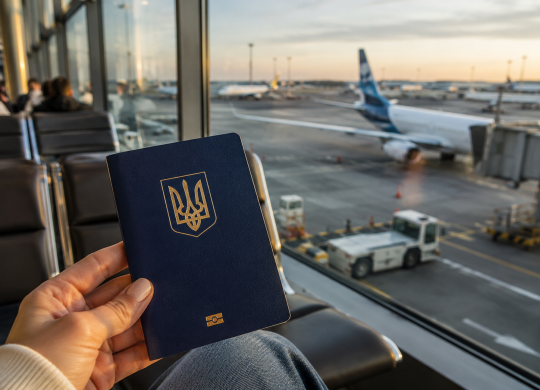
The EU’s new border control system, EES, which requires facial and fingerprint scans for tourists from third countries, has already caused hours-long lines and widespread flight delays. Due to the resulting transportation chaos, some European countries have begun temporarily abandoning biometrics and reverting to passport stamps. Here’s a look at which countries have already relaxed the rules and what this means for travelers in the summer of 2026

The launch of the EU’s new border control system, the Entry/Exit System (EES), was intended to make border crossings faster and safer. However, within the first few weeks of its launch, the system caused widespread delays at European airports, hours-long lines, and widespread passenger delays for flights. The biggest problems arose in countries with high tourist traffic, where airports simply could not handle the mandatory facial and fingerprint scanning for non-EU citizens.
Amid the transportation chaos, some European countries have already begun to temporarily abandon the new biometric requirements and return to the usual passport stamps. Greece was the first to officially simplify the procedure for tourists, while Italy and Portugal are also preparing to ease restrictions. We explain why the EES system has drawn so much criticism, which countries have already suspended biometric checks, and what travelers can expect in the summer of 2026.
In our previous article, we discussed how to choose safe accommodation, avoid mistakes, and book a hotel without unnecessary expenses.
Planning a trip abroad and want to protect yourself from unforeseen situations?
Travel insurance from Visit World will cover medical expenses, flight delays, and lost luggage in any country. Get a policy online in a few minutes and travel with confidence!

Why has the EES system caused chaos at EU airports?
The new Entry/Exit System (EES) officially went into effect in the European Union on April 10, 2026. It requires mandatory biometric registration for all citizens of non-EU countries. When crossing the border, travelers must have their faces and fingerprints scanned, and all information is automatically stored in a single European database.
However, in practice, the system’s launch proved problematic. At major international airports, the new checks significantly increased processing times, especially during peak hours. In some countries, lines stretched for several hours, and some passengers simply missed their flights.
One of the most high-profile incidents occurred in Italy. In Milan, due to delays during biometric checks, only 34 out of 156 passengers were able to board a flight to Manchester. The rest of the passengers were effectively left at the airport while the plane departed without them.
The situation became particularly challenging for popular tourist destinations during the summer season. Airports in Greece, Portugal, Italy, and Spain receive tens of thousands of tourists daily from the UK and other non-EU countries. Because of this, airlines, including Ryanair, have already called on European countries to temporarily ease the new rules to avoid an even greater transportation collapse in the summer of 2026.
We previously reported that the new EU border controls have already caused massive delays at airports.
Which European countries are already abandoning biometrics
The first country to officially relax the new EES rules was Greece. Authorities allowed citizens of the UK to pass through border control without mandatory biometric registration. In a statement, the Greek Embassy in the UK noted that British tourists are exempt from fingerprint and facial scans at the country’s border crossing points.
In Greece, officials explain this as a necessity to reduce wait times and avoid chaos at airports ahead of the start of the peak tourist season.
This is particularly important for the Greek islands, which welcome thousands of travelers from the UK every day. According to a local tourism organization, nearly 38 million tourists visited the country in 2025, and the number of British visitors increased by nearly 8%.
Portugal has not yet abolished the system entirely, but at the airports in Lisbon and Faro, travelers are already being allowed through without using biometric terminals if the lines become too long. According to media reports, the country’s authorities may officially adopt the Greek model in the near future.
Italy is also preparing to return to traditional passport stamping instead of full use of the EES. This decision was prompted by numerous delays at airports and negative reactions from tourists following the first few weeks of the new system’s operation.
In our previous article, we reported on flight disruptions in Europe due to fuel shortages.
Could other EU countries also bring back passport stamps?
So far, Spain and France have not officially announced the suspension of biometric checks. However, due to massive lines and the growing strain on airports, experts do not rule out that other EU countries may temporarily relax EES rules in the midst of the summer season.
European legislation allows countries to temporarily suspend the system in the event of excessive delays at the border. Initially, such a decision may remain in effect for up to 90 days, with the possibility of an extension for another 60 days. In fact, individual countries may continue using passport stamps until at least the fall of 2026.
Airlines are also putting additional pressure on the authorities. In particular, Ryanair has already called on European countries to review or temporarily suspend the new rules to avoid even greater problems during the summer vacation season. Carriers fear new flight delays, terminal overcrowding, and a wave of complaints from tourists.
Experts also note that the European Union does not plan to completely abandon the EES system. In Brussels, biometric controls are still considered an important tool for enhancing security and combating illegal migration. Therefore, the current relaxations are most likely to be temporary and related specifically to technical issues with the system’s launch.
In our previous article, we provided practical tips for traveling abroad with pets.
What should tourists know before traveling to Europe in 2026?
Despite temporary relaxations in some countries, the EES system remains in effect across the European Union. Therefore, travelers from non-EU countries should still be prepared for additional border checks, especially when traveling through major international airports.
Travelers are advised to arrive at airports at least 3–4 hours before departure, carefully check the entry rules for the specific country, and monitor updates from airlines. The longest delays are currently being reported in popular tourist destinations in Southern Europe, where the workload on border services increases sharply in the summer.
It is also important to note that even in countries that have temporarily relaxed their rules, biometric checks may be reinstated quickly. The final decision often depends on the situation at the airport, the number of passengers, and the length of lines on a given day.
Experts advise travelers to carry all necessary documents, check in online in advance, and allow extra time for border control. This will help avoid missing flights and reduce stress while traveling in Europe during the 2026 vacation season.
No matter how well thought-out your itinerary is, there is always room for force majeure when traveling. Unexpected medical expenses, transportation delays, or problems with luggage can ruin your plans and budget. Travel insurance helps you avoid unnecessary worries in such situations. You can apply for a travel insurance policy for a specific trip online at Visit World - quickly and without unnecessary bureaucracy!
Take out a policy online at Visit World and enjoy your trip without any unnecessary worries!
We remind you! Popular European tourist destinations are becoming increasingly crowded, so travelers are looking for alternatives without the crowds. In 2026, attention is turning to countries that remain off the beaten path but offer unique experiences, affordable prices, and an authentic atmosphere. Read more about 5 European countries that are rarely visited by tourists.
Products from Visit World for a comfortable trip:
Travel guide for 200 countries;
Legal advice from a local specialist on visa and migration issues;
Travel insurance around the world (please select the country of interest and citizenship to receive services);
Medical insurance all over the world.
We monitor the accuracy and relevance of our information, so if you notice any errors or inconsistencies, please contact our hotline
Recommended articles
3 min
Travels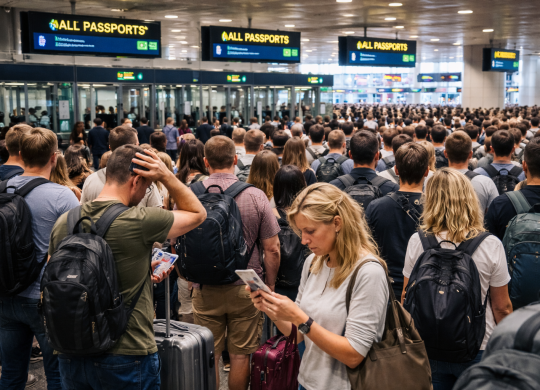
Nowe zasady wjazdu do UE sparaliżowały lotniska: pasażerowie czekają godzinami
Nowy system kontroli granicznej UE, który obejmuje zbieranie danych biometrycznych, już spowodował szerokie opóźnienia na lotniskach. Pasażerowie zmuszeni są czekać nawet kilka godzin, a sytuacja może się pogorszyć tego lata. Dowiedz się więcej, dlaczego nowy system spowodował chaos i jak wpłynie na podróże w 2026 roku
16 kwi. 2026
More details3 min
Podróż samolotem
Zakłócenia lotów w Europie w 2026 roku: opóźnienia, odwołania i czego mogą się spodziewać podróżni
Globalny przemysł lotniczy wchodzi w nowy kryzys: z powodu wojny na Bliskim Wschodzie, niedoborów paliwa i rosnących kosztów, linie lotnicze masowo redukują loty. Europa już ostrzega przed potencjalnymi zakłóceniami, a przewoźnicy nawet proponują rewizję zasad odszkodowań dla pasażerów. Dowiedz się, jak to wpłynie na podróże w 2026 roku
28 kwi. 2026
More details2 min
Transport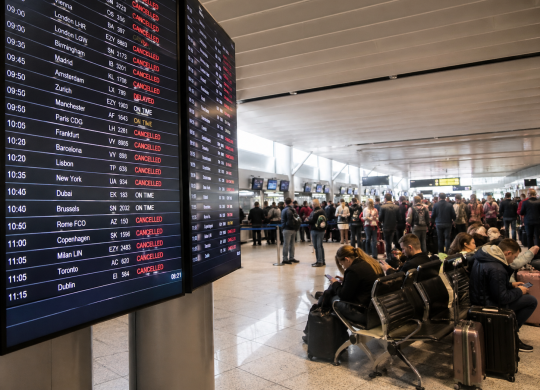
Strajk transportowy w Belgii 12 maja 2026 r.: masowe odwołania lotów na lotnisku w Brukseli
Lotnisko w Brukseli ostrzegło przed poważnymi zakłóceniami w maju 2026 r. z powodu ogólnokrajowego strajku. Niektóre loty są już zaplanowane do odwołania, a pasażerowie są proszeni o przygotowanie się na zmiany w rozkładzie. Dowiedz się dokładnie, kiedy spodziewane są zakłócenia, ile lotów jest zagrożonych i co powinni zrobić podróżni
12 maj. 2026
More details3 min
Podróż samolotem
Dubai Resumes Air Travel Following the Crisis in the Middle East: What's Happening with Flights
After several months of restrictions and a drop in passenger traffic of more than 65%, Dubai is beginning to resume air service. Airports are gradually resuming flights, but the situation in the region remains unstable. Learn more about how operations are changing at one of the world’s largest aviation hubs
05 maj. 2026
More detailsAll materials and articles are owned by VisitWorld.Today and are protected by international intellectual property regulations. When using materials, approval from VisitWorld.Today is required.