

UE wprowadza nowy system azylowy i migracyjny w 2026 roku: jakie zmiany czekają na ubiegających się o azyl i migrantów
Table of contents
- What is the CEAS and why is it being reformed?
- What changes is the EU introducing?
- Accelerated processing of asylum applications
- Who may be affected by the new procedures?
- New solidarity mechanism between EU countries
- Why is special attention paid to the countries of first entry?
- What will change for those who have been refused asylum?
- What to expect next?
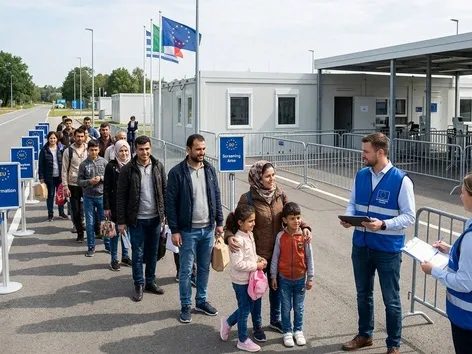
Unia Europejska zmierza w kierunku praktycznej realizacji dużej reformy polityki migracyjnej. Dowiedz się, jakie nowe zasady będą obowiązywać na granicach UE, jak zmieni się proces składania wniosków o azyl, kto będzie objęty przyspieszonymi kontrolami i dlaczego reforma już budzi kontrowersje wśród państw członkowskich

The European Union is starting to implement one of the most ambitious reforms of its migration policy in decades. The new system, part of the EU Pact on Migration and Asylum, aims to speed up the processing of applications for international protection, strengthen controls at external borders and share responsibility more evenly between member states.
The reform is based on an update of the Common European Asylum System (CEAS), the mechanism that defines the rules for receiving, registering and examining applications from people seeking protection in the European Union.
At the same time, the innovations have already sparked discussions among member state governments and human rights organizations. Some consider the reform a necessary step to regulate migration flows, while others fear that the new procedures could make it more difficult for people fleeing war, persecution or humanitarian crises to access protection.
Are you planning to move abroad, apply for a residence permit or obtain citizenship? Immigration procedures vary from country to country, and document requirements change frequently. To avoid mistakes and save time, use the up-to-date “Immigration Guide” from Visit World, which contains all the necessary instructions and recommendations.
Order your guide today and start your immigration journey with confidence!

What is the CEAS and why is it being reformed?
The Common European Asylum System was created to unify the approach of EU countries to considering applications for international protection. Its main idea is that people in need of assistance receive the same guarantees regardless of which EU country they apply in.
However, the migration crisis of recent years has demonstrated significant shortcomings of the current system. The greatest burden has fallen on the states located on the EU’s external borders, in particular Greece, Italy, Spain, Malta and Cyprus. It is these countries that are the first to receive the majority of people arriving in Europe by sea or land routes.
Member states have long argued over who should be responsible for processing asylum applications and housing asylum seekers. After years of negotiations, the EU has agreed on a new mechanism that should make the system more balanced.
Visit World services for tourists, migrants, and expats: Insurance | Guides | Legal advice
What changes is the EU introducing?
One of the key innovations will be mandatory prior screening of people arriving in the EU without proper documents or applying for asylum.
At the EU's external borders, migrants will undergo:
- identity checks;
- registration and entry into European databases;
- collection of biometric data;
- security checks;
- initial medical examinations.
The aim of these procedures is to establish the applicant's identity more quickly and determine the further course of their case.
Which Schengen countries have the highest rate of visa refusals, why applicants receive negative decisions and how to prepare documents to increase the chances of approval, the reader will read in this material.
Accelerated processing of asylum applications
Another important change will be the introduction of accelerated border procedures.
Some applications will be processed directly in special centers near the EU's external borders. While the procedure is ongoing, applicants may not receive the right to free movement within the European Union.
According to the new rules, certain categories of cases are planned to be processed in the shortest possible time. The overall cycle of processing an application and implementing a return decision in case of refusal can last up to 12 weeks.
The European Commission believes that this will allow for a faster separation of persons who are truly in need of international protection from those who do not meet the criteria for refugee status.
Who may be affected by the new procedures?
Accelerated procedures will primarily apply to citizens of countries whose residents traditionally have a low rate of approval of asylum applications in the EU.
Among the countries whose citizens may potentially be subject to border review more often, experts name:
- Russia;
- Turkey;
- Iran;
- Pakistan;
- Venezuela;
- Nigeria.
At the same time, each case will continue to be considered individually, taking into account the specific circumstances of the applicant.
How the deportation mechanism from the EU works in 2026, we tell you at the link.
New solidarity mechanism between EU countries
The reform also changes the approach to the distribution of responsibility between member states.
Previously, the main principle was the "first country of entry" rule, according to which it was the state through which a person first entered the EU that bore the main responsibility for his application.
The new system retains this mechanism, but supplements it with the principle of mandatory solidarity.
Now EU countries will have to either:
- accept some of the asylum seekers;
- provide financial support to the countries under the greatest migratory pressure;
- send additional personnel and technical resources to work with migrants.
This point remains one of the most controversial. Some Central and Eastern European countries have previously repeatedly opposed mandatory mechanisms for the redistribution of migrants.
Why is special attention paid to the countries of first entry?
The new reform will have the greatest impact on the countries that receive the main flow of migrants.
First of all, these are:
- Greece;
- Italy;
- Spain;
- Malta;
- Cyprus.
It is here that the centers for initial reception and border processing of applications will be created or expanded. This is expected to reduce the burden on national migration systems and speed up decision-making.
What will change for those who have been refused asylum?
A separate block of the reform is dedicated to the return of migrants who have not received international protection.
The EU has long emphasized that a significant part of expulsion decisions are actually not implemented due to the difficulty of establishing identity, lack of documents or the unwillingness of countries of origin to take their citizens back.
The new rules provide for:
- acceleration of return procedures;
- increased coordination between member states;
- expansion of cooperation with third countries;
- search for new mechanisms for implementing deportation decisions.
Also, in Europe, discussions continue on the concept of so-called "return hubs" outside the EU. The idea is to temporarily accommodate persons who have been refused protection in third countries on the basis of separate international agreements.
What to expect next?
2026 will be a crucial year for the implementation of the new EU Pact on Migration and Asylum. Member States will have to adapt their national systems to the new rules, create the necessary infrastructure and establish mechanisms for cooperation between countries.
Despite the controversy surrounding certain provisions, the European Union expects the reform to help simultaneously strengthen control over illegal migration, reduce the time required to process applications and ensure a fairer distribution of responsibility between member states.
Moving to another country is always associated with dozens of legal and bureaucratic procedures. It is necessary to correctly choose the immigration grounds, prepare a package of documents, take into account the terms of consideration of the case and the requirements of local legislation. The "Immigration Guide" from Visit World will help you get step-by-step instructions on how to apply for a temporary or permanent residence permit, citizenship, and also contains up-to-date information about government agencies, the cost of procedures, applicant selection criteria and practical advice for comfortable adaptation abroad. The guide is sent in PDF format to your email in just a few minutes after ordering.
Choose your destination country and get verified information with the "Immigration Guide" from Visit World!
Reminder! Mobile communication prices in Europe differ by 6 times depending on the country. We have already told you where the cheapest tariffs are in 2026, which countries have the highest prices and what determines the cost of communication for emigrants and travelers.
Photo - generated by Gemini
Products from Visit World for a comfortable trip:
Travel guide for 200 countries;
Legal advice from a local specialist on visa and migration issues;
Travel insurance around the world (please select the country of interest and citizenship to receive services);
Medical insurance all over the world.
We monitor the accuracy and relevance of our information, so if you notice any errors or inconsistencies, please contact our hotline.
Frequantly
asked questions
Czy nowe przepisy UE wpłyną na Ukraińców korzystających z ochrony czasowej?
Czy reforma automatycznie zmniejszy liczbę migrantów w UE?
Czy kraje UE mogą odmówić udziału w nowym mechanizmie solidarności?
Recommended articles
2 min
Expats
Najszybsze kraje, aby uzyskać obywatelstwo w 2026 roku: 10 najlepszych ścieżek do drugiego paszportu
Uzyskanie drugiego obywatelstwa stało się bardziej dostępne dla studentów, pracowników i inwestorów w 2026 roku. Dowiedz się, które kraje oferują najszybsze ścieżki do paszportu, jakie są dzisiaj wymagania i jak wybrać najlepszą opcję na swoją przeprowadzkę
08 cze. 2026
More details2 min
Residence permit
Dokumenty rezydencji UE w Polsce wygasają 3 sierpnia 2026 r.: Kogo to dotyczy i co zrobić
Polska unieważnia stare zezwolenia na pobyt UE – nawet te stałe – od 3 sierpnia 2026 r. Dowiedz się, kogo dotyczy ten termin, jakie będą konsekwencje braku działania oraz jak na czas złożyć wniosek o wymianę
10 cze. 2026
More details3 min
Work
Rynek pracy w Polsce: Ile obcokrajowców pracuje w kraju i w których sektorach jest ich najwięcej
Polski rynek pracy staje się coraz bardziej uzależniony od pracowników zagranicznych, którzy wypełniają luki na kluczowych sektorach gospodarki. Migranci stanowią obecnie 6–10% całkowitej siły roboczej, a niektóre sektory w praktyce nie mogłyby funkcjonować jak zwykle bez nich. Dowiedz się więcej o rozkładzie pracowników zagranicznych według branży, regionu i miasta w Polsce
13 cze. 2026
More details2 min
Work
Finlandia zaktualizowała swoje zalecenia dla pracodawców i pracowników w przypadku zagrożenia ze strony dronów. Dowiedz się, kto może pozostać w pracy, czy wynagrodzenia są utrzymywane i jak nowe zasady wpłyną na rynek pracy w 2026 roku
14 cze. 2026
More detailsAll materials and articles are owned by VisitWorld.Today and are protected by international intellectual property regulations. When using materials, approval from VisitWorld.Today is required.