

Traveling Through Slovenia by Car: Vignette, Toll Roads, and Traffic Rules
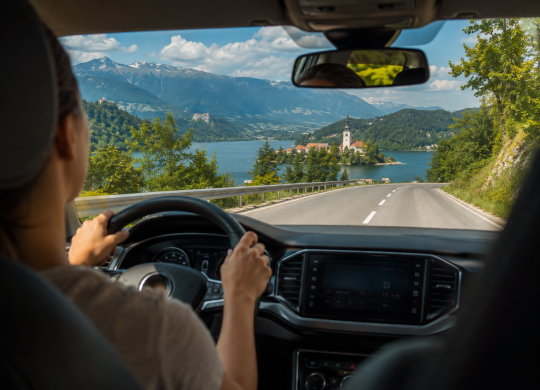
In Slovenia, an electronic vignette is required for most highways and expressways. It is linked to the license plate, and different rate classes apply to passenger cars and tall vans. The Karavanke Tunnel requires a separate fee. Find out how the e-vignette works in Slovenia in 2026, where it’s required, and what rules you should know before your trip

Slovenia is easy to cross in a few hours, but the shortest transit routes often run along toll highways. For vehicles weighing up to 3.5 metric tons, an electronic vignette (e-vignette) is required. It is not affixed to the windshield but is registered using the vehicle’s license plate number. DARS automatically monitors payment.
There’s also an important detail that isn’t found in many neighboring countries. The cost of the vignette depends not only on the vehicle’s weight but also on its design. Some vans and commercial vehicles fall under the more expensive Class 2B, while most passenger cars, SUVs, and minivans are classified as Class 2A. A separate fee is also charged for passing through the Karavanke Tunnel on the border with Austria.
Next, we’ll cover prices for e-vignettes, toll roads, traffic rules, fines, winter equipment, parking, and documents needed for a road trip through Slovenia.
Are you planning a trip to Europe by car?
In many countries, highways are tolled and require an electronic road vignette. This is a digital permit that confirms payment for the use of toll roads and is checked automatically by the license plate number - without stickers and paper receipts. Making a vignette online before you travel will help you avoid fines, travel delays, and unpleasant situations during inspections.

Basic Traffic Rules in Slovenia
In Slovenia, speed limits are fairly straightforward, but enforcement on highways and on approaches to cities is strict. On mountain roads, special attention should be paid to weather conditions and local restrictions.
The following basic speed limits apply to passenger cars:
- 50 km/h – in built-up areas
- 90 km/h – outside built-up areas
- 110 km/h – on expressways
- 130 km/h – on highways
- 10 km/h – in pedestrian zones and special low-speed zones
Traffic signs take precedence. On challenging stretches, in tunnels, or during roadwork, speed limits may be reduced separately.
To learn more about which European countries have introduced new speed limits on highways, follow the link.
Drinking and Driving
For most passenger car drivers, the permissible blood alcohol level is up to 0.5 g/kg of blood, or up to 0.24 mg/L in exhaled air. For professional drivers, the limit is zero.
Even if the reading does not formally exceed the legal limit, a driver must not get behind the wheel in a condition that impairs their ability to drive safely.
In our previous article, we discussed where in Europe it’s cheapest and fastest to charge an electric vehicle.
Cell Phones, Seat Belts, and Lights
Seat belts are mandatory not only in the front but also in the back seats. While driving, cell phones may only be used via hands-free.
Another important rule is that low beams or daytime running lights must be used even during the day. This rule applies year-round.
The Slovenian police also pay special attention to maintaining a safe following distance. This is particularly important in the summer due to heavy transit traffic on routes to Croatia, Italy, and the Adriatic coast. In July 2026, the police specifically identified speeding, cell phone use while driving, alcohol, and lack of concentration as the main risks on the roads.
Learn more about toll roads and traffic rules in Hungary by following the link.
Fines for Traffic Violations in Slovenia
In Slovenia, fines for typical traffic violations are quite high. Speeding, using a cell phone while driving, and driving under the influence are punished particularly severely. Some penalties also include demerit points.
For the most common violations, a driver may be fined:
- €250 and 3 penalty points – for using a cell phone while driving
- €120 – for not wearing a seatbelt
- €250 and 3 points – for running a red light
- €40–200 – for illegal parking
- €300–1,200—for driving under the influence of alcohol
We previously discussed the most common reasons tourists are fined on European roads in 2026.
Speeding Fines
The amount of the fine depends on where the violation occurred. Fines are higher in built-up areas than on intercity roads.
For example, exceeding the speed limit in a city by 20 km/h can cost €120 plus 3 penalty points. For higher speeds, the fine increases, and for serious violations, the driver may temporarily lose their license.
Speed enforcement was tightened in 2026. In just one week in August, Slovenian police recorded 3,903 speeding violations. Of these, 2,500 occurred in built-up areas, and another 1,012 on highways and expressways.
Starting in September 2026, the country began using new sectional speed control systems. These systems measure a vehicle’s average speed over a specific stretch of road. The first certified sections were installed on the Logatec–Vrhnika, Ljubljana Brod–Vodice, and Grosuplje–Ivančna Gorica routes.
It is important for foreign drivers not to assume that a fine will be issued on the spot. Cameras record the vehicle’s license plate number, and a notice of the violation may be issued after the trip is completed.
We previously reported that Europe is introducing new measures to combat drunk driving: cars won’t start after alcohol consumption.
Electronic Vignette in Slovenia
Vehicles weighing up to 3.5 metric tons require an e-vignette on Slovenian highways and expressways. It is linked to the license plate, so there is no paper sticker on the windshield. Before entering a toll road, it is important to correctly specify the country of registration, the vehicle’s license plate number, and its toll class.
In 2026, the official rates remain as follows:
- Class 2A – €16 for 7 days, €32 per month, €117.50 per year
- Class 2B – €32 for 7 days, €64.10 per month, €235 per year
- Motorcycles – €8 for 7 days, €32 for 6 months, €58.70 per year
In our previous article, we discussed the specifics of driving in the Czech Republic: roads, vignettes, parking, and fines in 2026.
Classes 2A and 2B
Most passenger cars fall into Class 2A. Class 2B includes taller vehicles where the height above the front axle is 1.3 meters or more. These are most often certain types of vans, minibuses, and tall commercial vehicles.
This is where drivers most often make mistakes. If you’re unsure about the class of a specific model, it’s best to check the DARS list before purchasing. Selecting a cheaper category by mistake does not count as valid payment for a more expensive class.
Learn more about the world’s best countries for road trips in 2026 by following the link.
Where to Buy an E-Vignette
The safest way to purchase a vignette is through the official DARS service or authorized partners. In May 2026, AMZS issued a separate warning about third-party websites that charge high commissions. In some cases, customers were even left without a valid vignette after payment.
You can activate the e-vignette immediately or purchase it in advance. For the Slovenian e-vignette, you can select a future start date, which is convenient for transit trips through the country.
Learn more about current toll rates in Poland for 2026 by following the link.
Toll Roads in Slovenia
An electronic vignette is required on most Slovenian highways and expressways. For vehicles weighing up to 3.5 metric tons, the fee is based on the vignette’s validity period rather than the number of kilometers traveled. For heavier vehicles, a separate system called DarsGo is in place, where the fee is calculated based on the distance traveled.
The toll network consists of:
- A1 – Maribor – Ljubljana – Koper
- A2 – Karavanke – Ljubljana – Obrežje
- A3 – connecting the A1 to the Italian border near Fernetiči
- A4 – Maribor – Ptuj – Croatian border
- A5 – Maribor – Murska Sobota – the Hungarian border
- Certain expressways in category H
In practice, this means that almost any fast transit through the country will take a vehicle onto the toll network. A toll-free route is possible via regular roads, but it often takes significantly longer.

Karavanke Tunnel
A special rule applies to the Karavanke Tunnel, which connects Slovenia and Austria. The toll for this tunnel is paid separately from the e-vignette.
Therefore, even a vehicle with a valid Slovenian vignette must pay an additional tunnel toll. This is important for routes between Ljubljana, Bled, and Villach, Austria.
Before your trip, check the current map of toll sections on the DARS website. The network is gradually changing, and certain access roads or urban sections may have different payment rules.
Learn more about the specifics of traveling through Slovakia in your own car by following the link.
Parking in Slovenia
In Slovenia, parking regulations are set by municipalities. Therefore, rates, payment hours, and maximum parking durations depend on the specific city. In tourist centers, free parking spots near the old town are rare, so it’s best to head straight to official parking lots.
In Ljubljana, public parking lots are divided into rate categories based on distance from the city center. For short stops in the city center, there are zones with time limits ranging from approximately 30 to 120 minutes. You can pay for parking via a parking meter, Urbanomat, or the Urbana SMS Parking service.
As of January 12, 2026, Ljubljana has increased its paid parking rates. At the same time, the city is expanding the areas with regulated parking, so old maps showing free parking spots may no longer reflect the current situation.
We previously wrote about the ins and outs of traveling through Croatia by car: fines, highways, parking, and important traffic rules.
Park and Ride (P+R) in Ljubljana
Park and Ride facilities are a convenient option for traveling to the city center. You can leave your car on the outskirts and then take a city bus.
In Ljubljana, the following P+R facilities are in operation: Dolgi most, Stožice, Studenec, Ježica, Barje, and Stanežiče. The parking ticket includes two bus rides and is valid for 24 hours from the time of payment.
This option is especially convenient during peak season. You won’t have to search for an open spot in the city center, and the risk of accidentally driving into a street with restricted traffic is significantly lower.
In Bled, Piran, Koper, and other popular tourist towns, the rules differ. Before entering, be sure to check local signs and rates. This is especially important in the summer, when central parking lots fill up quickly.
Learn more about traffic rules, fines, toll roads, and regulations for driving in Austria in 2026 by following the link.
Documents Required for Traveling in Slovenia
To travel through Slovenia in your own car, you’ll need a basic set of documents. During a traffic stop, the police may ask you to provide proof of your driver’s license, vehicle registration, and insurance coverage.
Typically, a driver needs:
- A valid driver’s license
- Vehicle registration certificate
- Passport or other form of identification
- Insurance document
- Rental agreement, if the car is rented
Licenses issued in EU and EEA countries are recognized in Slovenia. For documents from non-EU/EEA countries, the rules depend on the country of issuance and international agreements. In some cases, an international driver’s license may be required.
If the vehicle is not registered in the driver’s name, it is best to have a document confirming the right to use it. This is especially important for company cars, rental cars, or borrowed vehicles.
In our previous article, we discussed traffic rules in Italy in 2026, Autostrade tolls, fines, and key considerations for road travel.
Green Card for a Route Through Slovenia
Before an international trip, you should check whether your liability insurance is valid in Slovenia and in all transit countries. For vehicles from countries participating in the Green Card system, the international certificate confirms the required insurance coverage abroad.
This is particularly important for Slovenia due to its location. The route often passes through Austria, Hungary, Italy, or Croatia, so the policy must cover the entire journey, not just the time spent in a single country.
Through Visit World, you can apply for a Green Card online before departure. This allows you to select a validity period that covers the entire route and prepare the insurance documents for the trip in advance.
Winter Regulations in Slovenia
In Slovenia, winter equipment is mandatory from November 15 to March 15. It is also required outside this period if there is snow, ice, or other winter conditions on the road.
For passenger vehicles weighing up to 3.5 metric tons, two main options are permitted. The first is winter tires on all wheels. The second is summer tires with the minimum required tread depth and snow chains in the vehicle. Snow chains must be installed if road conditions require it.
The minimum tread depth for winter equipment is 3 mm. On snow-covered mountain roads, the police may temporarily restrict traffic for vehicles without the appropriate equipment.
You should take special care when planning routes through the Julian Alps, the Kranjska Gora area, Bled, Bohinj, and the mountain passes near the Austrian border. Weather conditions here can change dramatically even when roads remain dry in Ljubljana or along the coast.
Before a winter trip, it’s a good idea to check road conditions via DARS. During heavy snowfall, certain mountain passes may be closed, and additional restrictions may be imposed on highways for certain categories of vehicles.
Are you traveling abroad with your own car or a rented car?
Before traveling, it is important to check whether a road vignette is required for toll roads in the countries of your route. Failure to have a valid vignette can result in fines and automatic camera recordings of violations. Getting an electronic vignette from Visit World is an easy way to travel more relaxed, without unnecessary expenses and surprises on the road!
We remind you! Traveling through Europe in 2026 does not have to be expensive, even despite the general rise in prices. Analysts have compiled a rating of the most affordable destinations where you can combine relaxation, experiences, and moderate expenses. Follow the link to learn about budget locations in Europe that are worth considering for your 2026 vacation.
Products from Visit World for a comfortable trip:
Travel guide for 200 countries;
Legal advice from a local specialist on visa and migration issues;
Travel insurance around the world (please select the country of interest and citizenship to receive services);
Medical insurance all over the world.
We monitor the accuracy and relevance of our information, so if you notice any errors or inconsistencies, please contact our hotline.
Frequantly
asked questions
Do you need a vignette in Slovenia?
How much does a vignette cost in Slovenia in 2026?
Is the Karavanke Tunnel included in the cost of the vignette?
What is the fine for not having a vignette?
When are winter tires required in Slovenia?
Recommended articles
3 min
Transport
Toll Roads and Traffic Rules in Hungary in 2026: What Tourists Need to Know
To drive on most Hungarian highways, you need an e-matrica, and its category depends on the vehicle’s specifications and the number of passenger seats. In 2026, the system introduced new regional products, and an error in the license plate number or an incorrect category may result in an additional charge. Here’s how Hungary’s toll roads work, what traffic rules apply in the country, and what you need to know before your trip
27 Aug. 2026
More details3 min
Transport
Slovakia by Car in 2026: Traffic Rules, Fines, Vignettes, and Toll Roads
It’s easy to drive through Slovakia in a few hours, but a single mistake with eZnamka can make a short transit much more expensive. Toll highways here are monitored by license plate numbers, separate rules apply to trailers, and in winter, drivers also have to contend with the weather in the Tatra Mountains. Let’s break down how much Slovakia’s roads will cost in 2026, where a vignette is required, and which rules you shouldn’t ignore
30 Aug. 2026
More details3 min
Transport
Toll Roads and Traffic Laws in France in 2026: What Drivers Need to Know
France does not require a general road vignette, but many highways operate under the péage system, and dozens of cities have ZFE environmental zones that require a Crit’Air sticker. Added to this are hundreds of speed cameras, varying speed limits depending on weather conditions, and local regulations in cities. Find out how to pay for roads in France in 2026, where a Crit’Air sticker is required, and what rules you should know before your trip
03 Sep. 2026
More details3 min
Transport
Spain's Traffic Regulations in 2026: Fines, Toll Roads, and ZBE
In Spain, most expressways can be used without a toll sticker, but some autopistas still require a toll. In major cities, there are Low-Emission Zones (ZBE), automated cameras, and specific entry rules. Learn more about Spain’s traffic laws in 2026, current fines, toll roads, and restrictions on vehicles in cities
06 Sep. 2026
More detailsAll materials and articles are owned by VisitWorld.Today and are protected by international intellectual property regulations. When using materials, approval from VisitWorld.Today is required.