

Helsinki Tops the Nordic Real Estate Ranking: New Research
Table of contents
- What does IMI's Global Property Scoreboard actually measure?
- Helsinki, Finland: the capital of the region's deepest price correction
- Stockholm, Sweden: a supply shortage that's squeezing yields
- Reykjavik, Iceland: the highest yield, the highest bar to entry
- Oslo, Norway: capital preservation over income
- Copenhagen, Denmark: the most liveable city, the hardest door in
- When does a regional city outperform the capital?
- Property access: what to know before you buy
- Which market fits which goal?
- Where to get help buying property in Scandinavia

Helsinki has been named the world’s most attractive real estate market for foreign investors. Find out why the five Nordic capitals received such different scores in the IMI 2026 ranking

Every year, the Hungarian company IMI publishes its Global Property Scoreboard (GPS) – a tool that measures how comfortable it is for a foreign investor to buy, hold, and eventually sell property across 150 cities worldwide. As of September 2026, the researchers combined 42 indicators across seven categories, ranging from institutional quality to structural demand.
The Nordic result breaks the common assumption that the region is one uniform block of expensive, heavily taxed housing. All five capitals share nearly identical institutions – rule of law, judicial systems, property rights protection – yet they're scattered across the ranking, from first place globally to 82nd. Helsinki outranked even Lima and Abu Dhabi, while Copenhagen landed in the second hundred. The gap doesn't come down to governance quality; it comes down to how far each market has pulled back from its price peak, and how easy it is for an outsider to get in.
A roundup of countries where foreigners can buy property in 2026 here.
Buying property abroad isn't just about location and price – it's also about making sure the deal is legally sound. A real estate lawyer verifies ownership, prepares and reviews contracts, oversees the settlement with the seller, and protects your interests at every stage. Use VisitWorld's real estate lawyer matching service to find a specialist who works with your specific citizenship and destination country.

What does IMI's Global Property Scoreboard actually measure?
The GPS methodology deliberately favors markets where a foreign buyer can realistically complete a deal from start to finish: 30% of the weighting goes to property fundamentals, 20% to demand, and the rest is split evenly – 10% each – across access, costs, governance, resilience, and macroeconomics. Cities that are legally closed to foreign buyers don't make the ranking at all – there were 17 of those as of September 2026. Markets where access is restricted but not banned outright get a penalty, scaled to how complicated the entry process actually is.
That penalty hits Scandinavia harder than most other regions: two of the five capitals legally restrict property purchases by buyers from outside the EEA.
Also read: Latvia closes its golden visa for real estate as of September 15.
Helsinki, Finland: the capital of the region's deepest price correction
Finland's capital tops the global ranking on a combination that rarely shows up together: Nordic-grade institutions paired with a low entry point. After 2022, when Euribor rates jumped and 95% of Finnish mortgages are tied to it, national housing prices fell more than 10% from their peak. Statistics Finland recorded a 3.9% year-on-year drop in resale housing prices for Q2 2026, though the quarterly pace of decline has already slowed to 0.1% – a sign the market is nearing the bottom.
Access for foreigners here is about as simple as it gets. Finnish apartments are legally structured as shares in housing companies, and buying those shares requires no permit at all – a foreign buyer transacts on the same terms as a local one. The one exception applies to buyers from outside the EU and EEA, who need approval from Finland's Ministry of Defence; since July 2025, the ministry has also had the authority to reject applicants from Russia and Belarus.
The downside is low yield: roughly 3% in central Helsinki and slightly more across the broader market, while rental income and capital gains are taxed at 30–34%. It's also worth understanding the ownership structure – buyers don't get direct title to land and building, only a company share with a right of residence – and that major pipe renovations in older buildings (linjasaneeraus) can run well over a thousand euros per square metre, which can eat significantly into rental income if the bill lands in the first few years of ownership.
Visit World services for tourists, migrants, and expats: Insurance | Guides | Legal advice
Stockholm, Sweden: a supply shortage that's squeezing yields
Stockholm is governed just as well as Helsinki, but it has a different structural problem – the bruksvärdessystemet rent-setting system, which keeps controlled rents well below market rates. As a result, the average waiting time for a city-centre rental grew to 21 years in 2025, cutting into the returns available to investors.
Swedish property prices fell roughly 12% from their 2022 peak after the Riksbank's series of rate hikes, and construction all but stopped during that period. Still, builders broke ground on 11% more apartments in 2025 than the year before, and years of underbuilding have created a shortage that could support prices going forward. The krona has recovered too: after weakening steadily from 2012 through autumn 2023, it strengthened by roughly 14% against the dollar and 5% against the euro over the course of 2025.
Most Stockholm apartments are sold under the bostadsrätt system, where the buyer acquires a share in a housing cooperative rather than direct ownership. It's worth scrutinising the association's own debt here – a heavily indebted cooperative directly affects monthly fees and resale value.
Top 5 real estate markets for investment in 2026 here.
Reykjavik, Iceland: the highest yield, the highest bar to entry
Iceland's capital offers the best yield of the five cities – 4.88% as of Q2 2026, edging out Stockholm. That's supported by a tourism boom disproportionate to the country's size: 2.3 million foreign visitors in 2025 against a population under 400,000. Reykjavik also tops the 2026 Global Peace Index, and the country's energy grid runs on 99.9% renewables.
Getting in is harder here than anywhere else in the region, though. Under Act No. 19/1966, buyers from outside the EEA generally need approval from the Ministry of Justice, granted either on the grounds of a close connection to Iceland – capped at one property of no more than 3.5 hectares – or for a business that requires a larger plot. EEA citizens face no such hurdle, though what matters is genuine compliance with the terms of the EEA Agreement, not just holding the right passport.
Two more risk factors belong in the calculation: the krona's long history of volatility, and ongoing geological activity on the Reykjanes peninsula. International reinsurers have already excluded Grindavík from their coverage, and the state has bought out 938 properties there. That said, all the current hazard assessments apply to a zone roughly 40 km from the capital and don't extend to Reykjavik itself.
Looking for analysis on European home sales in 2025–2026? Find it here.
Oslo, Norway: capital preservation over income
Norway's capital ranks a modest 78th – the region's most surprising result, given the country's flawless macroeconomic backdrop: a sovereign wealth fund valued at 22,683 billion Norwegian kroner as of mid-2026. There are no nationality-based restrictions on buyers at all.
The problem shows up after the purchase. Gross yield tops out around 4.5%, and Norway's tenancy law significantly limits how much a landlord can raise rent at renewal. Adding to the risk, a decade of steady nominal price growth has left Oslo looking more like a market that's already priced in the good news than one with room for re-rating – the mirror image of Helsinki's situation. The krone lost roughly a quarter of its value against the euro over the decade to 2024, and while it's strengthened through 2025–2026, it's hard to call it a stable currency.
Copenhagen, Denmark: the most liveable city, the hardest door in
Denmark's capital has been ranked the world's most liveable city for the second year running by the 2026 EIU index, and the krone's euro peg removes currency risk for eurozone-based investors. Despite that, Copenhagen closes out the Nordic five – 82nd out of 150 – for two related reasons.
The first is access. Danish law requires Ministry of Justice approval for any buyer who hasn't lived in the country for at least five consecutive years, a rule that catches a far wider group of buyers than the restrictions in neighbouring countries. The second is taxation: rental income is taxed as personal income, with a top bracket of 7.5% kicking in above DKK 777,900. At an average gross yield of 2.87%, that leaves an investor with relatively little. The market is recovering faster than its neighbours, though – owner-occupied housing prices rose 10.7% nationally and 14% in the capital region in 2025, which leaves less room for the kind of cyclical upside Helsinki still offers.
When does a regional city outperform the capital?
The scoreboard's most useful insight sits outside the capitals altogether. Gothenburg ranks 13th globally – the second most attractive Nordic market after Helsinki, ahead of even Stockholm. Bergen ranks 46th, Aarhus 71st, and both beat their own capitals. In three of the five Nordic countries, a regional city – not the capital – turns out to be the stronger market for a foreign investor, following the same logic as Helsinki: a deeper correction plus open access.
Property access: what to know before you buy
None of the five Nordic countries offer a "golden visa" or residency rights in exchange for a property purchase – residency here comes through work, study, or business, not through an asset. The rules governing the purchase itself vary:
- in Finland, Sweden, and Norway, EU and EEA citizens buy freely, with no extra permits required;
- Denmark checks residency history rather than citizenship – a permit is required from almost any non-resident;
- Iceland makes no exceptions at all, beyond strict compliance with the terms of the EEA Agreement.
For investors from outside the EU, entrepreneurial permits are the practical route in: Finland offers a startup entrepreneur permit, Sweden one for the self-employed, and Norway and Denmark have similar options for startups. Iceland has no equivalent at all, making it the most closed country in the region on this front. Whichever route an investor takes, it's worth working out tax residency in advance – in Scandinavia, that's tied to where you actually live, not to owning property.
Golden Visa and real estate investment: countries with yields above 6% in 2026 here.
Which market fits which goal?
At its core, the scoreboard tracks three things: how deeply a market has corrected, how easy it is for a foreigner to get in, and how strong the demographic demand behind it is. Helsinki tops the ranking because it combines all three at once. Stockholm suits investors willing to wait for the supply shortage to play out. Reykjavik offers the highest income in exchange for tougher access and currency risk. Oslo is better suited to capital preservation than rental income. Copenhagen rewards the patience of those who've already cleared the permit hurdle.
The GPS ranking is best treated as a decision-making reference point, not a one-size-fits-all instruction.
Where to get help buying property in Scandinavia
Nordic property markets look simple only on the surface – behind the strong institutions sit Ministry of Justice approvals in Denmark and Iceland, cooperative-based ownership structures in Sweden and Finland, and association debts that can significantly affect a property's value after purchase. Navigating all of that alone is genuinely difficult, especially if you're buying as an investment rather than for your own residence.
A real estate lawyer can check a housing company's or cooperative's documents, estimate the real cost of upcoming major renovations, and prepare the deal in line with the specific country's legislation. That kind of support matters most on markets with restricted foreign access, where the permit process demands precision in the paperwork.
VisitWorld's service lets you quickly find a real estate lawyer matched to your citizenship and destination country. Take the first step toward a safe deal now.
A reminder: in 2026, European property prices are still shifting, but affordable markets do remain for foreign buyers. We've updated the data and identified the cities where the price per square metre is lowest for international buyers. We've also previously covered the best-value countries in Europe for buying property in 2026.
Photo – generated with Gemini
Products from Visit World for a comfortable trip:
Travel guide for 200 countries;
Legal advice from a local specialist on visa and migration issues;
Travel insurance around the world (please select the country of interest and citizenship to receive services);
Medical insurance all over the world.
We monitor the accuracy and relevance of our information, so if you notice any errors or inconsistencies, please contact our hotline.
Frequantly
asked questions
How can investors protect themselves against currency risks when investing outside the eurozone?
Recommended articles
3 min
Investment
Rental Yields on Real Estate for the Greek Golden Visa: Regions, Rates, and Calculations
Greece’s Golden Visa program attracts investors from around the world, but rental yields on real estate vary significantly depending on the region, property type, and minimum investment thresholds. New regulations have changed the program’s eligibility requirements, and the 2026 tax reform is affecting owners’ net income. Learn more about which regions of Greece offer the highest rental yields and how investment thresholds affect an investor’s actual profit
17 May. 2026
More details2 min
Popular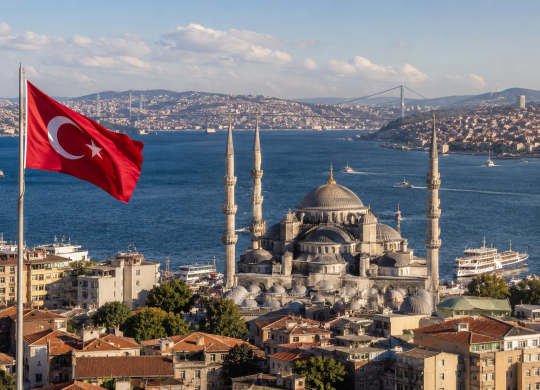
The Turkish Real Estate Market in 2026: Where to Buy Property and What Investors Should Look For
For many years now, Turkey has remained one of the most popular destinations for foreigners looking to buy real estate. High tourist demand, large-scale infrastructure projects, and relatively affordable prices continue to fuel interest in the local market, even amid economic changes. Learn more about how much housing costs in Turkey in 2026, which regions are in highest demand, and what risks to consider before buying
24 Jun. 2026
More details2 min
Investment
The Estonian government has adopted a decision that will change the real estate market for foreign buyers from certain countries. The new rules will affect both individuals and companies with specific ownership structures, and will also determine the fate of properties that have already been purchased. Learn more about Estonia’s new bill, the groups of people subject to the restrictions, and the reasons for imposing the ban
07 Jul. 2026
More details3 min
Work
Taxes in Spain in 2026: How Much Do Employees, Entrepreneurs, and Property Owners Pay?
Moving to Spain means not only new opportunities but also new tax obligations. Who is considered a tax resident? What tax rates apply to employees, entrepreneurs, and property owners? And what do foreigners need to know before moving? Learn more about Spain’s tax system and the current tax rates for 2026
09 Jul. 2026
More detailsAll materials and articles are owned by VisitWorld.Today and are protected by international intellectual property regulations. When using materials, approval from VisitWorld.Today is required.