

Where can foreigners buy real estate in 2026?
Table of contents
- What mechanisms restrict foreign real estate buyers?
- Markets Fully Open to Foreign Buyers
- Markets Where Foreigners Can Only Own Apartments
- Restricted Areas Within Individual Countries
- Countries with a permit system and higher taxes
- Markets Closed to Foreign Real Estate Buyers
- Markets opening up in 2025–2026
- What Should You Check Before Buying Real Estate Abroad?
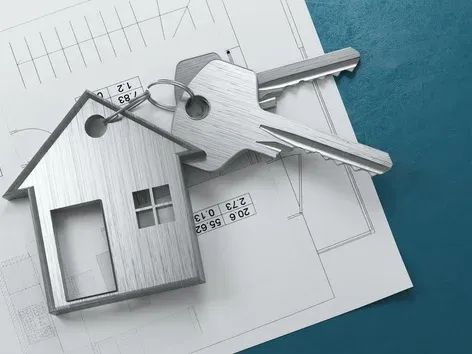
The rules for foreigners buying real estate in 2026 are changing rapidly. Learn more about the markets that are open and closed to buyers

The map of regions where foreigners are allowed to purchase real estate is changing faster than at any time in the past decade. Some countries are tightening restrictions and imposing bans, while others are opening their markets to foreign investors. For buyers, the nature of these restrictions and the direction in which a particular country’s legislation is moving are of crucial importance. ImiDaily reports on this.
In this article, we’ll examine the markets investors inquire about most frequently—from those that are fully open to those that are effectively closed—and discuss the key changes taking effect in August 2026.
Are you planning to buy real estate abroad and unsure what restrictions apply in your target country?
A real estate lawyer from the Visit World portal will analyze the legislation of your chosen jurisdiction, select the optimal transaction structure, and take into account the tax implications for foreign buyers.

What mechanisms restrict foreign real estate buyers?
Between full ownership rights and a complete ban on foreign buyers, there are several intermediate mechanisms. Governments restrict the purchase of apartments in multi-unit buildings through quotas, close off coastal and border areas, require prior approval of transactions, set a minimum price, or impose a higher stamp duty. Separately, there are regimes with limited-term property rights—the land remains state-owned, and the foreigner is granted only the right to use it for a specified period.
Overall, as of August 2026, most markets fall somewhere in the middle of this spectrum. That is why simply classifying a country as “open” or “closed” rarely describes the actual situation—the specifics of the regulatory framework determine exactly what a foreign buyer can purchase in their own name.
Markets Fully Open to Foreign Buyers
At the most open end of the spectrum, holding a foreign passport has almost no impact on the ability to purchase real estate. The United States imposes no federal restrictions on foreign buyers—purchases are possible in any state, with title registered in the buyer’s name. The United Kingdom is just as open regarding the purchase itself: foreigners pay an additional 2% stamp duty in England and Northern Ireland. In Portugal, Italy, France, Ireland, and Greece, the buyer’s citizenship also does not affect the transaction.
Outside Europe, a similar policy applies in Japan, which imposes no restrictions on foreign ownership of housing or land. Georgia and Panama allow full ownership of urban real estate, while Brazil restricts foreigners only to rural and border areas. Recent changes in these markets have primarily concerned residency programs: Portugal excluded real estate from its “golden visa” program in 2023, and Greece raised the threshold for an investor visa to 800,000 euros in Athens, Thessaloniki, and on popular islands.

Photo: ImiDaily
Markets Where Foreigners Can Only Own Apartments
A significant group of countries accepts foreign investment in apartments but reserves land exclusively for local residents. Thailand allows full ownership of an apartment in a multi-unit building registered in one’s own name, with a limit of 49% foreign ownership of the building’s total area. Once the quota is exhausted, the options are a 30-year lease or the establishment of a Thai company. Foreigners cannot own land, so villas are sold on terms of long-term lease or ownership of the building only.
The Philippines uses a similar model—the Condominium Act prohibits the transfer of an apartment to anyone other than citizens or corporations that are at least 60% owned by Filipinos. Following the 2023–2024 reforms, Vietnam allows foreigners to own apartments for a 50-year term with the right to renewal, subject to restrictions: no more than 30% of the apartments in a building and no more than 250 buildings in a single administrative district, without the transfer of land use rights.
Where is the most expensive place to buy an apartment in Europe?— Find out by following the link.
Restricted Areas Within Individual Countries
In some generally open countries, territorial exceptions apply. Mexico allows foreigners to purchase real estate without restrictions in most of the country, including Mexico City and inland regions. The restricted access zone—an area within 50 kilometers of the coast and 100 kilometers from the border—is constitutionally off-limits for direct ownership. Purchases here are possible through a fideicomiso, a bank trust that holds title on behalf of the foreigner, or through a Mexican company.
Turkey allows purchases across most of its territory and grants citizenship for a $400,000 investment in real estate. At the same time, purchases near military and security zones are prohibited, and foreign ownership is limited to 30 hectares per buyer and 10% of the area of any given district. The replacement of the old reciprocity criterion with a country-list system in 2012 means that citizens of several countries are still prohibited from purchasing real estate, and decisions may vary between provinces.
Top 5 real estate markets for investment in 2026 — compiled here.
Countries with a permit system and higher taxes
The third group of markets keeps access open but adds an approval process or costs that effectively act as a filter. Switzerland remains the strictest: the federal “Lex Koller” law prohibits most non-resident foreigners from purchasing residential real estate and limits the number of vacation homes sold to foreigners each year.
In April 2026, the Federal Council launched a public consultation on further tightening the rules, and most foreigners can purchase a home in Switzerland only after obtaining a Swiss residence permit.
Similar mechanisms are in place in other jurisdictions:
- Singapore — an additional stamp duty of 60% of the property’s value for foreign buyers, and for homes with land, government approval is required, which is rarely granted outside the Sentosa Cove enclave;
- Malaysia — a minimum purchase price, typically one million ringgit, and state-level approval;
- South Korea — Starting August 26, 2025, foreigners must obtain permission before purchasing property in Seoul, 23 cities in Gyeonggi Province, and seven districts of Incheon; they must move in within four months and hold the property for at least two years (this rule was in effect until August 25, 2026; it is advisable to verify the status before closing a deal);
- India — Non-resident Indians and holders of the “Overseas Indian” card may purchase property freely, while foreigners without Indian origin require permission from the central bank.
Markets Closed to Foreign Real Estate Buyers
The “effectively closed” category includes countries where foreigners are practically unable to purchase residential property. Canada has banned foreign citizens and foreign-controlled companies from purchasing residential real estate since the beginning of 2023, and Ottawa has extended the restriction until January 1, 2027. The ban applies to properties within a census metropolitan area or census agglomeration, so smaller cities and rural areas remain exempt. An exception applies to buildings with four or more apartments.
Australia closed the existing-home market to foreigners in April 2025, and the May 2026 federal budget extended the ban through June 2029. New construction remains available to foreign buyers upon obtaining a permit—this policy directs foreign capital toward new construction rather than the existing housing stock. China generally allows foreigners to purchase only one residential unit for personal use, and only after living, working, or studying in the country for at least one year. Indonesia reserves full ownership rights (Hak Milik) for its citizens, while offering foreigners the right to use, lease, or own property through an Indonesian company.
Read about the best countries for foreigners to buy real estate in 2026 — in this article.
Markets opening up in 2025–2026
The long-standing trend toward tightening rules for foreigners is no longer universal. New Zealand, which had banned most residential property purchases by foreigners since 2018, passed amendments in 2025 allowing holders of an “Active Investor Plus” visa to purchase real estate valued at 5 million New Zealand dollars or more. The change took effect in March 2026 following a prior delay—restrictions on the broader market remain in place, but large investors are now able to purchase property.
Saudi Arabia has gone even further. A new law that took effect in January 2026 allows foreigners to purchase real estate in designated zones; foreign residents may own one residential property, and additional conditions apply to Mecca and Medina—this replaces a system that previously restricted independent purchases primarily to holders of premium residency status. Spain is moving in the opposite direction: on April 3, 2025, it discontinued its “golden visas,” and a bill proposing a tax of up to 100% for non-EU buyers without residency, effective as of March 2026, has stalled in parliament due to a lack of support.
See also: European Housing Sales 2025–2026. Where Is the Real Estate Market Growing the Fastest?
What Should You Check Before Buying Real Estate Abroad?
The landscape of foreign real estate ownership is changing, and governments regularly revise the rules after they are implemented. Canada, for example, narrowed the scope of its ban in 2023 following feedback from provincial and municipal authorities. That is why a country that is closed today may open up tomorrow, as demonstrated by New Zealand and Saudi Arabia. Before transferring funds, it is advisable to set out key terms in writing to avoid legal risks and unexpected tax costs.
Three points to verify in writing before the transaction:
- Type of property title—full ownership or a long-term lease with a limited term.
- Availability of a specific location and building for foreign buyers (geographic zones, quotas, listing restrictions).
- Planned changes to relevant regulations in the near future, including the extension or repeal of existing restrictions.
Important! Real estate ownership rules for foreigners vary significantly across jurisdictions, and the changes in 2025–2026 have added further unpredictability to the market. A real estate lawyer from the Visit World portal can help you verify access to a specific location, choose the optimal transaction structure—direct ownership, a trust, a lease, or a corporate structure—and consider the tax implications for your jurisdiction. This reduces the risk of rejection during the transaction process and protects your investment from future regulatory changes.
Schedule a consultation with a Visit World real estate attorney to receive a personalized analysis of your case before closing the deal!
Reminder! In a previous article, we reported that Greece will increase the property tax for foreigners by a factor of 5.
Photo: Magnific
Products from Visit World for a comfortable trip:
Travel guide for 200 countries;
Legal advice from a local specialist on visa and migration issues;
Travel insurance around the world (please select the country of interest and citizenship to receive services);
Medical insurance all over the world.
We monitor the accuracy and relevance of our information, so if you notice any errors or inconsistencies, please contact our hotline.
Frequantly
asked questions
In which countries can foreigners purchase real estate without restrictions?
Can foreigners buy real estate in Canada in 2026?
Recommended articles
3 min
Investment
How to Start a Business in Germany: A Detailed Guide for Foreigners
Foreigners can conduct business in Germany as sole proprietors, partners, or company founders. Learn more about legal structures, requirements, costs, and the registration process
30 Aug. 2026
More details3 min
Investment
Protection Against Account Freezing: Reliable Jurisdictions
The freezing of accounts isn't limited to sanctions lists. We take a closer look at countries where banks' actions are subject to judicial oversight. Learn more about reliable jurisdictions
29 Aug. 2026
More details3 min
Investment
Greece's Golden Visa 2026: New Thresholds and Faster Processing
Greece has updated the eligibility criteria for the “Golden Visa” and expedited the application review process. Learn more about the program’s new terms for 2026
30 Aug. 2026
More details3 min
Investment
How to Start a Business in Spain: Documents, Taxes, and Expenses
Foreigners can do business in Spain as self-employed individuals or by establishing a separate company. The choice of business structure affects registration, taxes, social security contributions, and the entrepreneur’s personal liability. Learn more about the required documents, key steps, costs, and rules for starting a business in Spain
08 Sep. 2026
More detailsAll materials and articles are owned by VisitWorld.Today and are protected by international intellectual property regulations. When using materials, approval from VisitWorld.Today is required.