

UE przygotowuje się do wprowadzenia cyfrowego euro: co zmieni się dla obywateli i firm
Table of contents
- What is the digital euro, and how will it differ from regular money?
- How will the digital euro work for ordinary users?
- How will the digital euro change things for stores, banks, and payment companies?
- Why does the European Union need its own digital payment instrument?
- When might the digital euro be launched in Europe?
- What issues regarding the digital euro remain unresolved?
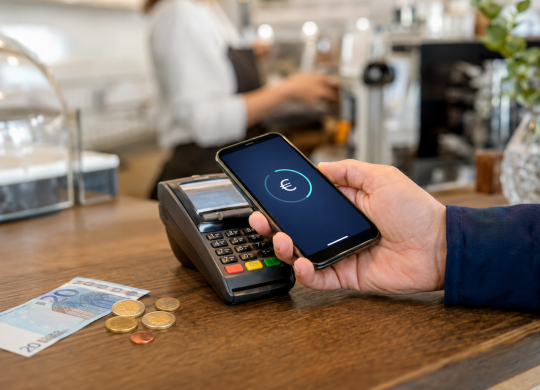
Parlament Europejski dał zielone światło do rozpoczęcia ostatecznych negocjacji w sprawie cyfrowego euro, które ma być powszechnie dostępną alternatywą dla prywatnych systemów płatniczych. Projekt pilotażowy ma zostać uruchomiony w 2027 roku, a pierwsze pełnoskalowe wdrożenie może mieć miejsce w 2029 roku. Dowiedz się więcej o tym, jak działa cyfrowe euro, planowanych ograniczeniach oraz konsekwencjach dla konsumentów i firm

The European Parliament has endorsed moving to the final stage of negotiations on the digital euro. 416 members voted in favor of launching interinstitutional consultations, 169 voted against, and 22 abstained. Now, representatives of the European Parliament and the governments of member states must agree on the final model for the new form of money, including rules on fees and compensation for banks and payment providers.
According to Euronews, the most intensive negotiations are expected in the fall of 2026, with final approval of the legislation expected by the end of the year. If the process goes according to plan, testing of the digital euro will begin in the second half of 2027, and the European Central Bank will be technically ready for a potential launch in 2029.
Planning a trip abroad?
Insurance from the Visit World portal will help you avoid unnecessary risks. The policy covers the costs of medical treatment, emergency assistance, and unforeseen situations abroad, so that even in the event of delays or route changes, you remain protected and can focus on your trip rather than on problems.

What is the digital euro, and how will it differ from regular money?
The digital euro will be an electronic form of government-issued money, issued and guaranteed by the European Central Bank. Its value will be equivalent to that of the regular euro: one digital euro will be equal to one euro in cash or in a bank account.
It is not a cryptocurrency, nor is it a new currency with a floating exchange rate. The digital euro will complement banknotes, coins, and bank payments, but it will not replace them. Users will store their funds in a special digital wallet opened through a bank or another authorized payment provider.
The new system will allow users to:
- Pay for purchases in brick-and-mortar and online stores
- Transfer funds to other users
- Make payments using a smartphone or card
- Make payments even without an internet connection
The ECB will provide the technical infrastructure, but commercial banks and payment companies will be responsible for directly serving customers, opening wallets, and processing transactions. There are also plans to allow providers from EU countries outside the eurozone to participate in the rollout of the digital euro.
How will the digital euro work for ordinary users?
Citizens will be able to open a digital wallet through a bank or other payment provider. Basic services are planned to be free of charge: users will not pay for opening or closing a wallet, storing funds, standard transfers, or depositing or withdrawing digital euros.
At the same time, users will not be able to hold an unlimited amount in their wallet. The ECB will set a limit to ensure that a mass transfer of bank deposits into digital currency does not pose risks to the financial system. The specific amount of the limit has not yet been agreed upon. If the cost of a purchase exceeds the available balance or the set limit, the wallet can be automatically linked to a bank account.
Special attention is being paid to privacy. The ECB should not receive data that allows for the direct identification of a user based on their payments. During offline transactions, transaction information will be stored only on the payer’s and payee’s devices, making such payments similar to using cash.
At the same time, online payments will be subject to financial monitoring and anti-money laundering requirements.
How will the digital euro change things for stores, banks, and payment companies?
Most businesses in the eurozone will be required to accept the digital euro on an equal footing with other legal tender. An exception will be made for the self-employed, as well as micro- and small businesses that do not accept electronic payments at all.
For merchants, the new system could reduce transaction processing costs. Fees for accepting the digital euro are expected to be lower than current card payment fees. During a transition period lasting at least five years, these fees will be capped based on rates for comparable payment methods. After that, the cap rates will be calculated based on the system’s actual costs.
The most complex issue in the final negotiations remains the compensation model. European institutions need to determine:
- Which banks and payment providers will receive compensation?
- Who will cover their costs?
- How will fees be distributed among participants in the payment chain?
- What will be the maximum fee for merchants?
Banks are concerned about the additional costs of creating wallets, verifying customers, and processing transactions. At the same time, excessively high fees could make the digital euro unprofitable for businesses. Striking a balance between the accessibility of the new system and fair compensation for providers’ services will be the central theme of the negotiations in the fall of 2026.
Why does the European Union need its own digital payment instrument?
One of the project’s main goals is to reduce Europe’s dependence on international payment systems. Currently, there is no single European digital payment method in the eurozone that is available in all countries and for all types of transactions.
According to the ECB, international payment systems process about 61% of card transactions in the eurozone. At the same time, 13 of the 20 countries in the monetary union are entirely dependent on such systems, and only nine national card schemes operate across the entire EU.
The market continues to grow. In the first half of 2025, 44 billion card payments totaling €1.7 trillion were made in the eurozone. This represents increases of 9.6% and 8.7%, respectively, compared to the same period in 2024. Cards accounted for 57% of all non-cash transactions.
The digital euro is intended to create a pan-European alternative that will operate under uniform rules and be subject to oversight by European institutions. This will allow the EU to keep payment data and key financial infrastructure within its own jurisdiction, strengthen competition, and reduce the risk of disruptions in the event that foreign providers’ operations are restricted.
When might the digital euro be launched in Europe?
The digital euro has not yet been put into circulation. The European Parliament’s vote has merely paved the way for negotiations with the Council of the EU on the final text of the legislation. The most active phase of consultations is expected in the fall of 2026, and the rules are scheduled to be finalized by the end of the year.
The further timeline is as follows:
- Second half of 2026 – negotiations between the European Parliament and EU member state governments;
- Second half of 2027 – start of pilot testing
- 2027–2028 – conduct of a 12-month pilot under real-world conditions
- 2029 – potential first issuance of the digital euro
During testing, participants will test payments in stores, online purchases, and peer-to-peer transfers. The ECB has already received more than 50 applications from large and small banks and other payment providers interested in participating in the pilot project.
At the same time, 2029 remains an indicative timeline rather than a guaranteed launch date. The ECB will make the final decision on the launch after adopting the relevant regulation and evaluating the test results.
What issues regarding the digital euro remain unresolved?
Despite the transition to final negotiations, the definitive model for the digital euro has not yet been approved. The European Parliament, the Council of the EU, and the ECB must agree on several key parameters.
First and foremost, the maximum balance of the digital wallet remains unknown. The limit must be sufficient for everyday transactions but not so high that citizens begin transferring money en masse from their bank deposits. This could reduce banks’ resources for lending and pose risks to financial stability.
Negotiators must also determine:
- The final compensation model for banks and payment providers
- Maximum fees for merchants
- The list of companies required to accept the digital euro
- Rules for processing personal data during online payments
- Mechanisms to protect against fraud, cyberattacks, and technical failures
A separate challenge is to balance privacy with financial monitoring requirements. The digital euro should offer more privacy than most commercial payment services, but it must not become an anonymous tool for illegal transactions. The conditions for its launch and the level of user trust will depend on the final decisions regarding these issues.
Are you preparing for a trip abroad in 2026?
Medical insurance from the Visit World portal will provide reliable support during your trip, especially in the context of flight changes and unstable schedules. The policy covers medical expenses, emergency assistance, and other unforeseen situations outside the country, so you can feel confident even when plans have to be adjusted at the last minute.
We remind you! Croatia is stepping up its fight against drunken tourists by introducing new restrictions in popular resort cities. Split became the first city in the country to introduce strict rules on alcohol sales this summer. Read more about the new bans, hefty fines for tourists, and changes in Croatia's tourism strategy.
Products from Visit World for a comfortable trip:
Travel guide for 200 countries;
Legal advice from a local specialist on visa and migration issues;
Travel insurance around the world (please select the country of interest and citizenship to receive services);
Medical insurance all over the world.
We monitor the accuracy and relevance of our information, so if you notice any errors or inconsistencies, please contact our hotline
Recommended articles
2 min
Travels
The EU may postpone the launch of ETIAS due to chaos at the borders
The EU may postpone the launch of ETIAS—a new pre-authorization system for travelers from visa-waiver countries. This is due to issues with the EES biometric system, which has already caused lines and delays at some European borders. Learn more about why the EU is revising the launch schedule for the new entry rules and what this means for travelers
08 lip. 2026
More details2 min
Investment
Szwajcaria po raz drugi z rzędu zajęła pierwsze miejsce w rankingu Henley & Partners najbezpieczniejszych krajów do przechowywania kapitału. Dowiedz się, które kraje znalazły się w pierwszej dziesiątce, dlaczego USA zajęły dopiero 24. miejsce oraz jak zmieniły się rankingi w wiosennej aktualizacji indeksu
09 lip. 2026
More details2 min
Transport
Speed limits on European highways are changing: here's where you can now drive up to 150 km/h
More and more European countries are revising their highway speed limits. In the Czech Republic, speeds of up to 150 km/h are already permitted on a specific section of highway, while the Netherlands is gradually reinstating a speed limit of 130 km/h. Learn more about where the new speed limits are already in effect and what to keep in mind before taking a road trip through Europe.
12 lip. 2026
More details2 min
Travels
Nowe Siedem Cudów Świata: Które Nowoczesne Zabytek Mogą Znaleźć Się Na Liście
Rozpoczęto globalne poszukiwania siedmiu nowoczesnych cudów stworzonych po 1801 roku. Każdy może zgłosić miejsce, a ostateczni zwycięzcy zostaną ogłoszeni w lipcu 2027 roku. Dowiedz się więcej o kryteriach wyboru, etapach głosowania i potencjalnych nominacjach
11 lip. 2026
More detailsAll materials and articles are owned by VisitWorld.Today and are protected by international intellectual property regulations. When using materials, approval from VisitWorld.Today is required.