

Where in the EU are hourly wages the highest: leaders and laggards in 2026

Hourly wages vary widely across EU countries—in some nations, wages are rising rapidly, while in others they remain virtually unchanged. Learn more about where in Europe workers earn the most and which countries are seeing the fastest growth

Hourly wages in European Union countries continue to fluctuate under the influence of economic trends, inflation, and labor demand. Over the past year, the disparity between countries has become even more pronounced: some nations are experiencing rapid growth in labor costs, while in others the rate of increase remains minimal.
According to Eurostat data, Eastern European countries have taken the lead in growth rates, while figures in Western Europe are significantly more modest. These trends are reshaping the landscape of attractiveness for both employees and employers. Let’s explore where in the EU it is most advantageous to work today and which sectors offer the highest pay.
Earlier, we talked about the European countries where it is easiest to get a work visa and start a career abroad.
Are you planning to work abroad in 2026? Visit World's Work Guide will help you quickly understand the requirements for a work permit, the list of necessary documents, and the application procedure. The guide contains current employment rules, the main types of permits, common mistakes made by applicants, and practical advice after moving. You will receive structured information in PDF format within a few minutes after ordering. Check out the guide and prepare for working abroad without any stress.

How have hourly wages changed in the EU in 2026?
In 2026, uneven growth in hourly wages was recorded across European Union countries. Overall, employers’ labor costs continued to rise, but the pace of this growth varied significantly by country.
The most dynamic wage growth is observed in Central and Eastern European countries. This indicates a gradual narrowing of the gap with the more developed EU economies. At the same time, in some Western European countries, growth rates remain minimal, which may indicate a stabilization of the labor market.

Annual growth rates of hourly wages in EU countries, %
The overall trend shows that countries with lower income levels are experiencing faster growth rates, while economies with already high wages are growing more modestly. This trend is gradually shifting the balance of the labor market in Europe and influencing the choice of countries for employment.
To learn more about the ranking of minimum wages in Europe in 2026, please follow the link.
Countries with the highest and lowest wage growth
In 2026, the gap in hourly wage growth rates among EU countries became particularly noticeable. Some countries are experiencing a sharp rise in labor costs, while others remain at nearly the same level or are even recording a decline.
Slovenia led the way in growth, with hourly wages increasing by a whopping 19.1%. This is one of the highest rates in the EU, indicating active economic development and rising demand for workers. High growth rates were also recorded in Bulgaria (+13.8%) and Croatia (+10.5%). These countries continue to rapidly catch up with Europe’s more developed economies in terms of wage levels.
At the same time, the trend is significantly more subdued in a number of Western and Northern European countries. The lowest growth was recorded in France (+1.1%), Italy (+2.3%), Denmark (+2.5%), and Finland (+2.6%). In Germany and Cyprus, the figure stood at +2.7%, which is also a relatively low level for developed economies.
Malta deserves special mention, as it recorded a 3.9% decline in hourly wages. This is a rare occurrence within the EU and may be linked to domestic economic factors or changes in the structure of employment.
Thus, a clear trend emerges in 2026: countries with lower income levels demonstrate significantly faster wage growth, while in more developed economies, increases occur more slowly. This gradually narrows the gap between different regions of the European Union and affects the attractiveness of the labor market for workers.
By the way, in our previous article, we talked about the cheapest countries to live in in 2026.
Which sectors pay more: a sectoral breakdown?
In addition to differences between countries, the sector in which a person works also plays an important role. In 2026, hourly wage growth in the EU was uneven not only geographically but also across economic activities.
The highest growth rates were recorded in real estate activities (+4.6%). This is due to high demand for services in this sector, as well as activity in the residential and commercial real estate markets. Professional, scientific, and technical activities are at nearly the same level (+4.5%), which traditionally remains one of the highest-paying sectors in Europe.
Significant growth is also observed in education (+4.4%), construction, and transportation and storage (both sectors at +4.1%). This indicates stable demand for workers in these sectors and a gradual increase in wage levels.

Changes in hourly wages by economic activity in the EU, %
In contrast, the lowest growth or even a decline was recorded in the industrial and energy sectors. Specifically, the supply of electricity, gas, and steam showed only +2.7%, manufacturing +2.8%, and the mining sector actually saw a decline (-1.2%).
These figures confirm the general trend: wages are growing most rapidly in sectors related to services, knowledge, and infrastructure, while traditional industrial sectors are showing more subdued growth or even a decline.
We tell you where it is best to build a life in the long term — here.
Where in the EU are hourly wages actually the highest?
Although Eastern European countries are experiencing the fastest wage growth, this does not mean that hourly wages are highest there. In 2025, the economically developed countries of Western and Northern Europe remain the leaders in terms of absolute wage levels.
The highest figures are traditionally recorded in Luxembourg, Denmark, and the Netherlands. In these countries, hourly wages significantly exceed the EU average thanks to high economic productivity, developed labor markets, and strong social protection for workers. The group of leaders also includes Belgium, France, and Germany, where wages remain consistently high even amid slow growth.
At the same time, hourly wages in Central and Eastern European countries are still lower. However, it is precisely these countries that are demonstrating the fastest growth rates, gradually narrowing the gap with Western European countries.
It is important to understand that high hourly wages are often accompanied by higher living costs. Therefore, when choosing a country to work in, one should consider not only the salary but also purchasing power, the tax burden, and housing costs.
If you are planning to work abroad in 2026 and want to better understand the rules of employment, work permits, taxes, and basic employee rights, it is worth preparing for the move in advance. Visit World's practical working guide will help you navigate the current requirements, types of work permits, and steps to take upon arrival to avoid common mistakes and feel confident in your new life abroad.
We remind you! New economic indicators show which countries have been able to increase their GDP and which have lost ground due to inflation and slowing growth. Ranking of the richest countries in the world in 2026 — follow the link.
Products from Visit World for a comfortable trip:
Travel guide for 200 countries;
Legal advice from a local specialist on visa and migration issues;
Travel insurance around the world (please select the country of interest and citizenship to receive services);
Medical insurance all over the world.
We monitor the accuracy and relevance of our information, so if you notice any errors or inconsistencies, please contact our hotline
Frequantly
asked questions
Which EU country has the highest hourly wage?
Where in the EU are wages growing the fastest?
Why is wage growth lower in Western Europe?
In which sectors are wages growing the fastest?
Which is more important: the wage level or its growth?
Recommended articles
3 min
Work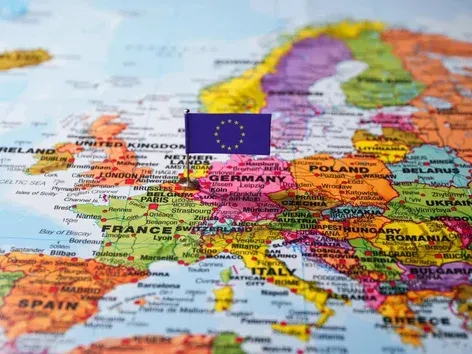
The European labor market is undergoing significant changes: some industries are actively looking for personnel, while others are gradually reducing open positions, and salary levels and job availability vary significantly from country to country. Understanding these trends helps you make informed choices when planning to work abroad. Learn more about the most in-demand professions in the EU, the countries with the highest salaries, and the regions where it is easiest to find a job
18 Feb. 2026
More details3 min
Work
Where in Europe is the best work-life balance: TOP 5 countries for work-life balance
Work-life balance is becoming one of the main factors when choosing a country to live or work in. A new ranking shows where in Europe employees have more time for rest, family and personal development. Learn more about the European countries with the best work-life balance in 2026
16 Mar. 2026
More details2 min
Work
EU Blue Card in the Czech Republic: Requirements, salary and procedure for obtaining it
The EU Blue Card offers foreign specialists the opportunity to work and live legally in the Czech Republic and to obtain a long-term residence permit in Europe. This permit is intended for highly qualified specialists who have a contract with an employer and meet the requirements of the program. Find out more about the conditions for obtaining the EU Blue Card in the Czech Republic, eligibility requirements and the application procedure
14 Mar. 2026
More details2 min
Residence permit
Singapore ONE Pass 2027: New Visa for AI and Tech Experts
Singapore launches new visa for top tech professionals. Find out what ONE Pass (AI and Tech) is, what the requirements are, the salary range and how the program will change opportunities for IT professionals and startup founders from 2027
17 Mar. 2026
More detailsAll materials and articles are owned by VisitWorld.Today and are protected by international intellectual property regulations. When using materials, approval from VisitWorld.Today is required.