

Little-Known Cities in Spain Without Crowds of Tourists
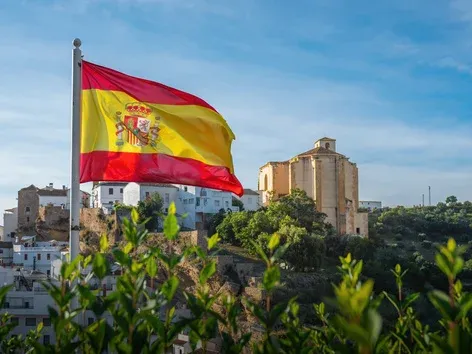
Salamanca, Lugo, and Teruel are great destinations for a leisurely trip through Spain. They feature Roman walls and cathedrals. Learn more about prices and attractions

Most travelers to Spain opt for large cities and coastal resorts. At the same time, the country has small towns with historic centers, UNESCO sites, and local tapas bars where things are much quieter. Travel Off Path recently published a selection of such locations.
Which cities are worth visiting, what to see there, how much the trip costs, and whether it’s safe to go there—we’ll cover all that in this article.
Planning a trip to lesser-known cities in Spain?
The travel guide from the Visit World portal will help you plan your itinerary and choose which sights to visit.

Which Spanish cities should you visit to avoid the tourist crowds?
For a peaceful trip through Spain, consider Salamanca, Cuenca, Teruel, Lugo, and Alcudia on Mallorca. All five cities have well-preserved historic centers where you can explore cathedrals, fortress walls, and palaces without long lines. A serving of a local dish at a tapas bar here costs as little as $4, and a main course at an affordable restaurant ranges from $13.50 to $19.
- Salamanca—a university town with a sandstone city center.
- Cuenca—houses overlooking the Uecar Gorge.
- Teruel—Mudejar architecture in Aragon.
- Lugo—3rd-century Roman walls.
- Alcudia—a medieval town with Roman ruins on Mallorca.
Salamanca: What to See in the City with the Oldest University
Salamanca is located in northwestern Spain, near the border with Portugal. Its historic center is a UNESCO World Heritage Site, and most of its buildings are constructed of ochre-colored sandstone. One of the city’s key landmarks is the University of Salamanca, founded in 1218. It is considered the oldest university in Spain still in operation and is known for its carved Plateresque-style façade.
Photo: iStock
A stroll through the city is best started at the Plaza Mayor—an 18th-century Baroque square with arcades and cafés. The city center is also home to two interconnected cathedrals: a Romanesque-Gothic cathedral and a Gothic cathedral with Baroque elements. Don’t miss the 15th-century Casa de las Conchas, whose facade is adorned with hundreds of stone shells, and the Dominican monastery of San Esteban, with its Renaissance facade and cloisters.
The world’s best hotels in 2026—listed in this article.
Cuenca: Hanging Houses and the Cathedral Overlooking the Uecar Gorge
Cuenca is a medieval city in central Spain, built on cliffs overlooking the Uecar Gorge. The main reason to visit is the Casas Colgadas, or “hanging houses,” with wooden balconies jutting out over the precipice. These houses are listed as a UNESCO World Heritage Site. Another famous landmark is the Cathedral of Santa María y San Julián, built in the 12th century.
The cathedral’s façade features three pointed arches, a rose window, and two unfinished towers, while the interior preserves stained-glass windows and a Gothic nave with chapels. A beautiful view of the hanging houses can be seen from the San Pablo iron pedestrian bridge, and a view of the old town’s tiled roofs from the Manganá clock tower. To sample the local cuisine, visit the family-run tapas bar La Ponderosa, which serves morteruelo—a traditional meat pâté.
We previously wrote about 5 Caribbean Islands for Active Adventures.
Teruel: Mudejar Landmarks in Aragon
Teruel is a 12th-century city in the highlands of Aragon, known for its Mudejar architecture. This style blends Gothic elements with Islamic influences: decorative brickwork, geometric patterns, and glazed tiles. You can reach the city by train from Valencia in about 2.5 hours. Be sure to try the local highland cuisine, especially jamón de Teruel.
- Santa María de Mediavilla Cathedral—the city’s main cathedral, featuring a wooden ceiling painted with geometric patterns, medieval figures, and religious scenes.
- The Salvador Tower is a 14th-century bell tower listed as a UNESCO World Heritage Site, featuring green-and-white tiles and an observation deck.
- The Church of San Pedro and the Lovers’ Mausoleum—the burial site of Diego de Marcilla and Isabel de Segura, the heroes of a local legend about star-crossed lovers.
- The San Martín Tower—a 14th-century Mudejar tower with decorative brickwork and colored ceramics.
- Torico Square—the city’s central square with a small statue of a bull.
Photo: Expedia
Lugo: Roman Walls and the Old Town in Galicia
Lugo is a Galician city known to pilgrims on the Way of St. James who follow the Camino Primitivo route. The Old Town is completely surrounded by 3rd-century Roman walls, which are listed as a UNESCO World Heritage Site. You can walk the entire circuit of the walls for free: the route is just over 2 km long. From the top, you can see the cathedral, the streets of the historic center, and the hills of Galicia.
The Lugo Cathedral, with its two towers, combines Romanesque, Gothic, and Baroque features; admission costs about $11. Other attractions include the Roman bridge over the Miño River, the Plaza Mayor with the town hall, and the Roman baths, preserved beneath a modern hotel complex. At local tapas bars, you can order “polbo a feira.”
Where to Go in Europe This Winter — read here.
Alcudia: A Peaceful Medieval Town in Mallorca
Alcudia is a fortified town on Mallorca, located about a 50-minute drive northeast of Palma. Foreign tourists visit here much less frequently than they do the island’s capital or the beach resorts. The old town is surrounded by 14th-century medieval walls, part of which you can walk along. Inside, narrow cobblestone streets and stone houses with tiled roofs have been preserved.
Photo: ABC Mallorca
The Porta del Mol gate, with its two defensive towers, leads into the old town, and the Church of Sant Jaume, with its stained-glass windows, stands along the walls. On the outskirts lies the Roman city of Pollencia, founded in 123 B.C.—Mallorca’s most important Roman archaeological site, featuring a theater partially carved into the rock. After your sightseeing, you can relax on the white-sand, shallow-water beach of Platja d’Alcúdia or have lunch at the family-run restaurant Celler Ca’n Costa, housed in a building dating back to 1594.
The safest and most dangerous major cities in the world in 2026 — click here.
Prices in lesser-known Spanish cities: food, transportation, and lodging
The cost of the trip depends on the city. A serving of a local dish at a tapas bar costs $4–7, a main course at an inexpensive restaurant costs $13.50–19, and a three-course lunch costs $23–34 per person. A night’s stay in a guesthouse will cost $55–110, and in a 4-star hotel, $110–250. The highest prices among the five cities are in Alcudia, Mallorca.
- Salamanca: a serving of ornaso at a tapas bar—$4, a cappuccino—$2.35, 0.5 L of beer – $3.10, a main course at an inexpensive restaurant – $15, a three-course lunch – $28, a bus ride – $1.35, a taxi – $7–10, a guesthouse – $55 per night, a 4-star hotel – $120 per night.
- Cuenca: a serving of sarajos – $5, a cappuccino – $2.25, a beer – $2.25, a main course – $17, a three-course lunch – $23, a bus ride – $1.35, a taxi – $7–10, a guesthouse – $60, a 4-star hotel – $115.
- Teruel: a serving of jamón de Teruel – $5, cappuccino – $2.25, beer – $3, main course – $15, three-course meal – $28, bus – $1.45, taxi – $7–10, guesthouse – $65, 4-star hotel – $115.
- Lugo: small portion of polbo a feira – $7, cappuccino – $2.05, beer – $3.35, main course – $13.50, three-course lunch – $28, bus – $0.75, taxi – $7–10, guesthouse – $55, 4-star hotel – $110.
- Alcudia: a serving of pa amb oli – $7, a cappuccino – $3.15, a beer – $4.50, a main course – $19, a three-course lunch – $34, a bus ride – $2.25–4.50, taxi – $8–12, guesthouse – $110, 4-star hotel – $250.
See also: The Best Cities for Nightlife in 2026.
Is it safe to travel to small towns in Spain?
Salamanca, Cuenca, Teruel, Lugo, and Alcudia are considered safe for tourists; serious crimes against visitors are rare here. At the same time, the U.S. State Department has issued a Level 2 travel advisory for all of Spain due to the risk of terrorism and civil unrest. Therefore, during your trip, you should follow basic safety rules, avoid demonstrations, and keep up with local news.
- Keep an eye on your belongings in crowded squares, near landmarks, on beaches, and at transportation hubs.
- In Cuenca, wear comfortable shoes: the city’s streets are steep, and some paths run along the edge of a cliff. In the evening, it’s best to avoid poorly lit routes.
- In Lugo, be careful on the city walls when it rains—some sections lack guardrails.
In 2026, Mallorca saw protests against overtourism related to overcrowding and housing issues. For the most part, they took place in Palma and generally do not affect Alcudia.
By the way! Planning a route through lesser-known cities in Spain is easier with a tour guide from the Visit World portal. It will help you decide in advance which cities and attractions are worth visiting and plan your trip without having to search for information on the spot.
Get your tour guide on the Visit World portal and set off on your journey with a ready-made itinerary!
Reminder! In our previous article, we talked about 10 hidden gems around the world worth visiting in 2027.
Photo: GetYourGuide
Products from Visit World for a comfortable trip:
Checklist for obtaining a visa and necessary documents in Spain;
Legal advice on immigration to Spain;
Travel insurance for foreigners in Spain;
Medical insurance all over the world.
We monitor the accuracy and relevance of our information, so if you notice any errors or inconsistencies, please contact our hotline.
Frequantly
asked questions
Which lesser-known Spanish cities are worth visiting without the crowds of tourists?
How much does lodging cost in small Spanish cities?
Recommended articles
3 min
Travels
Airbnb Launches Rain Insurance: Who Can Get Up to €1,000?
Airbnb has launched rain insurance offering compensation from €50 to €1,000 per rainy day. The service is available to residents of 10 European countries. Learn more about payout conditions, how to purchase the insurance, and how to receive compensation
28 Oct. 2026
More details3 min
Travels
Where to Go in Europe in November 2026: Events and Hotels
Fall in Europe marks the start of the Christmas market season and the winter sun. Learn more about events, new hotels, and destinations for November 2026
29 Oct. 2026
More details2 min
Travels
Snow-Reliable Ski Resorts in Europe: Top 10 for 2026/27
Italy, Austria, and France lead the ranking of resorts with the most reliable snow. Discover where to ski in the 2026/27 season and what sets the top 3 apart
29 Oct. 2026
More details3 min
Travels
10 Unusual Places to Visit in the UK You Shouldn't Miss
The United Kingdom is home to many amazing places that not all tourists know about. Huge sculptures, mysterious caves, unusual architectural landmarks, and natural wonders. Learn more about 10 unique locations in the United Kingdom that are worth adding to your travel itinerary
31 Oct. 2026
More detailsAll materials and articles are owned by VisitWorld.Today and are protected by international intellectual property regulations. When using materials, approval from VisitWorld.Today is required.