

Czech Motorways and High-Speed Rail: How the Transport Network Will Change by 2042
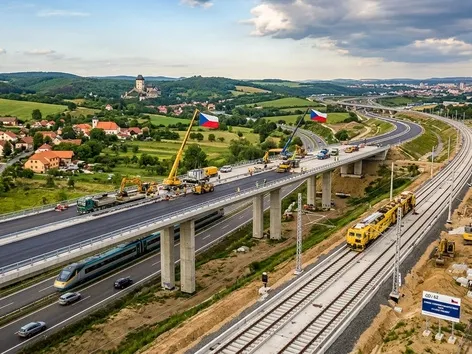
The Czech Republic is undergoing a major road and rail upgrade, with Prague Airport set to be accessible by train by 2031. Find out which motorways will be completed by 2033, when high-speed rail will be operational across the country, and what these plans mean for driving across the Czech Republic

The Czech Republic is undergoing one of the largest modernizations of its transport infrastructure in recent decades. It is not just about individual sections of roads - the country is simultaneously completing its motorway network and laying the foundation for a high-speed railway, which will eventually connect major cities and airports according to European standards. The plans of the Ministry of Transport and relevant departments were discussed on the ČT24 program "90'" by Radek Matl, head of the Roads and Motorways Directorate, and Tomáš Tot, director of the Railway Administration.
Free public transport has been introduced in Porto, read who can use it in our previous article.
Are you planning a trip by car to the Czech Republic or another European country? One of the mandatory documents for crossing the border is an international insurance policy "Green Card", which confirms the presence of a motor vehicle abroad. It operates in 42 countries in Europe, Asia and Africa and protects your interests in the event of an accident, regardless of where it occurred. You can apply for a policy completely online and receive it by email in a few minutes.

Autobahns: by 2033 - basic network, by 2050 - expansion
According to Matl, the key task in the coming years is to complete the basic network of motorways by 2033. This is about 400 kilometers of roads, which should close the main transport corridors of the country. Then, by 2050, the network is planned to be expanded by another 600 kilometers and finally connect the motorways to each other at the speed level.
The year 2026 has already become indicative in this regard: according to the Czech publication Zdopravy.cz, about 40 kilometers of new sections will be opened during the year, and about 100 kilometers more will be built. In particular, the construction of the D35 motorway section between Ostrov and Vysočy Mit through the Homole tunnel continues, and in the spring of 2026, a consortium led by STRABAG received a contract for the construction of another 16-kilometer section of the D35 between Ulibice and Gorzyce - the work is designed for about four years. In parallel, work is underway on the border section of the D11 motorway towards Poland and on the D48 route.
As for the speed of movement, everything is not so clear-cut. Matl confirmed that in some sections it is theoretically possible to increase the permitted speed to 150 km/h, but the final decision is political, not engineering. The D1 motorway will definitely not be affected by such changes - both due to the high traffic load and the peculiarities of the relief and geometry of the road.
Another detail that distinguishes the Czech plans among neighboring countries is the digitalization of the autobahns. In the future, the roads will be equipped with a system capable of exchanging data with autonomous vehicles: for example, warning drivers about an approaching ambulance before it even appears in sight.
Belgium plans to introduce a national electronic vignette - a mandatory fee for most passenger cars, about the main changes in this material.
Visit World services for tourists, migrants, and expats: Insurance | Guides | Legal advice
Railway: train to the airport in 25 minutes
The most anticipated news concerns the connection with the Vaclav Havel Airport. The new railway line, which will connect the center of Prague with the airport and the largest city of the Central Bohemian Region, Kladno, will significantly reduce travel time - it will take just 25 minutes, and trains will run at an interval of 10 minutes. Construction of the station is scheduled to begin in late 2029, and completion is scheduled for the third quarter of 2031.
In parallel, the Czech Republic is working on a network of main high-speed railways throughout the country - they are planned to be completed by 2042. According to preliminary calculations by Tot, the cost of a ticket for such lines will be up to 450 crowns, which is approximately in line with prices in other European countries. The question of the maximum speed (250 or 320 km/h) is not a priority at the moment - much more important are the modernization of safety systems, the full digitalization of the railway and the gradual automation of train control and communication with passengers.
Read also, in December 2026, Eurostar will launch the first direct rail connection between London and Antwerp.
When and what is planned to be reconstructed in the Czech Republic's transport system
Briefly about the timing, if we reduce everything to the main landmarks:
- 2026 - commissioning of new sections of the D35, D11 and D48 motorways;
- 2029–2031 - construction of a railway station and a line to Prague Airport;
- 2033 - completion of the basic motorway network;
- 2042 - completion of main high-speed railways throughout the country;
- 2050 - final expansion of motorways by another 600 km.
For those who regularly travel through the Czech Republic in transit to other EU countries or plan a trip by car, these plans have a very practical meaning: new sections of autobahns are gradually reducing the load on old routes such as the D1, and the development of the railway to the airport may eventually become an alternative to your own car for part of the route.
Given the active construction of new highways in the Czech Republic, more and more drivers are choosing the route through this country.
In such a situation, the “Green Card” is not a formality, but real protection: without it, crossing the border in your own car is impossible, and fines for its absence start at 1,000 euros and can be accompanied by deportation or even seizure of the vehicle. The electronic version of the policy has the same legal force as the paper one and is accepted in all member countries of the system - just show a PDF file from your smartphone.
Apply for a Green Card in advance so that your trip abroad does not depend on the insurance company's work schedule.
Reminder! Interrail and Eurail passes allow you to travel by train in 33 European countries, but not all journeys can be used without additional charges. We have already told you what the difference is between the Global Pass and the One Country Pass, how much they cost and when you need to book a seat separately.
Photo – generated by Gemini
Products from Visit World for a comfortable trip:
Checklist for obtaining a visa and necessary documents in Czech Republic;
Legal advice on immigration to Czech Republic;
Travel insurance for foreigners in Czech Republic;
Medical insurance all over the world.
We monitor the accuracy and relevance of our information. Therefore, if you see any error or discrepancy, please write to our hotline.
Frequantly
asked questions
Do I need an e-vignette to drive on newly opened sections of Czech motorways?
Will Czechia become a more convenient transit corridor after the motorway network is completed?
Will foreign travelers be able to use the new high-speed railway under the same conditions as locals?
Recommended articles
2 min
Transport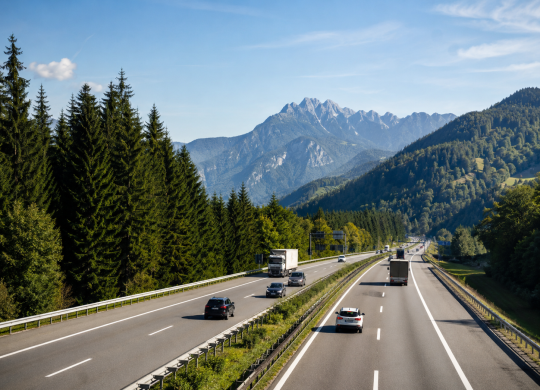
Speed limits on European highways are changing: here's where you can now drive up to 150 km/h
More and more European countries are revising their highway speed limits. In the Czech Republic, speeds of up to 150 km/h are already permitted on a specific section of highway, while the Netherlands is gradually reinstating a speed limit of 130 km/h. Learn more about where the new speed limits are already in effect and what to keep in mind before taking a road trip through Europe.
12 Jul. 2026
More details2 min
Air travel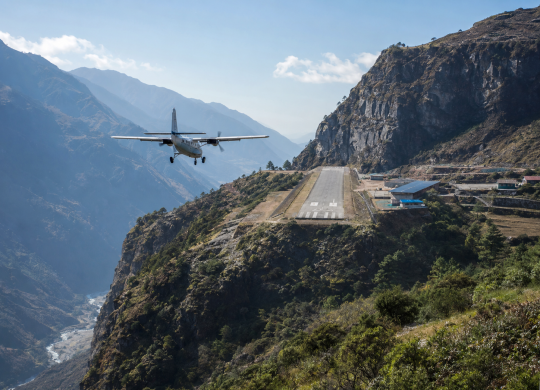
Top 10 Most Dangerous Airports in the World: The Most Extreme Places to Take Off and Land
Short runways, high mountains, sudden gusts of wind, and the ocean just a few meters from the plane turn an ordinary flight into a challenging ordeal for the crew. Learn more about the 10 most dangerous airports in the world and the reasons why only specially trained pilots are allowed to land at some of them
19 Jul. 2026
More details2 min
Popular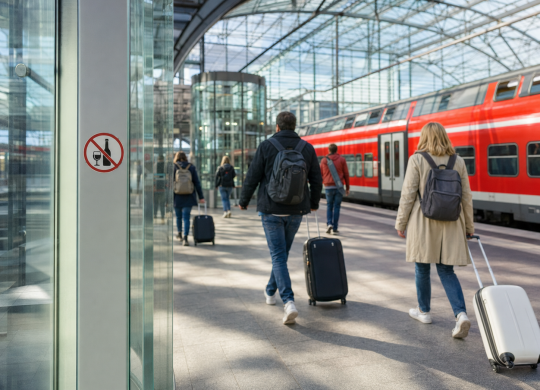
Germany to Ban Alcohol Consumption at All Train Stations: When Will the New Rule Take Effect?
Deutsche Bahn is implementing a ban on drinking alcohol at all 5,400 train stations across the country. Learn more about when the rule takes effect, any exceptions, and the consequences for violators
24 Jul. 2026
More details2 min
Transport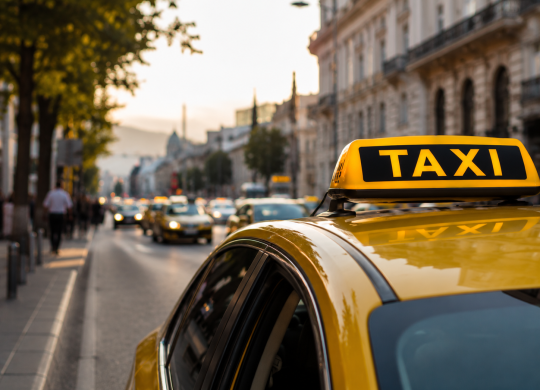
The average cost per kilometer for a taxi ride varies by more than a factor of 20 around the world: from $4.70 in Switzerland to $0.23 in the Philippines. Learn more about the countries with the highest and lowest fares, the reasons for this difference, and additional costs that travelers should take into account
25 Jul. 2026
More detailsAll materials and articles are owned by VisitWorld.Today and are protected by international intellectual property regulations. When using materials, approval from VisitWorld.Today is required.